AI's New Class Divide: Frontier Models vs. Everyday Users
OpenAI's Sol and Anthropic's Fable showcase a widening gap between elite power users and millions who encounter AI passively.
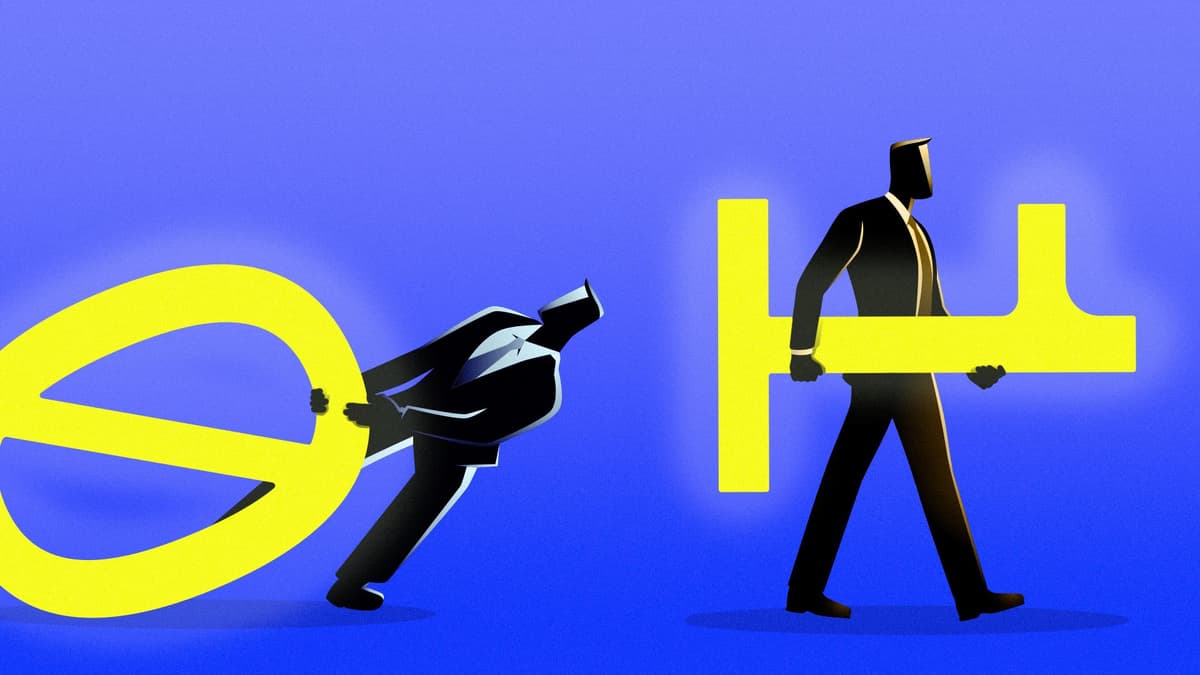
A stark divide is emerging in how Americans experience artificial intelligence, separating those wielding cutting-edge capabilities from the vast majority encountering AI as little more than enhanced search.
For a small elite of frontier users, the latest models represent transformative power—autonomous agents that write code, conduct research, and solve complex problems with minimal oversight. For most Americans, AI remains an incremental improvement: smarter autocomplete, faster email responses, background features that shave minutes but don't fundamentally change their work.
Why it matters
Trillions in economic value and millions of jobs hinge on a technology most Americans neither trust nor understand. This digital divide—between AI "haves," "have-nots," and "know-nots"—will shape the distribution of wealth and opportunity for decades, yet the industry's legitimacy remains fragile even as adoption grows.
The frontier tier
The newest generation of AI models targets capabilities most people will never use. OpenAI's Sol and Anthropic's Fable now dominate discussions among elite developers, prized for running extended coding and research workflows autonomously.
Prominent AI practitioners have spent recent weeks debating these models' characteristics with the fervor of sports rivalries. AI researcher Peter Gostev described Fable as "a 'wise owl' who is very thoughtful and very well spoken," while characterizing "GPT-5.6-Sol" as "like a rottweiler who will grab the problem by the throat and not let go until it is done."
Yet the population capable of evaluating Sol versus Fable on technical benchmarks represents a tiny fraction of the country. For most Americans, these names and their performance metrics carry no meaning.
The everyday reality
Nearly half of U.S. adults now use AI chatbots, according to the reporting, but the dominant use case remains basic information retrieval—the same function Google has performed for twenty years. Millions more encounter AI unknowingly through search summaries, customer service bots, and invisible app features.
OpenAI reports more than 50 million paying subscribers among ChatGPT's 900 million weekly users. Those running autonomous coding agents represent a fraction of that already-small subset.
Access itself has become stratified. Sol launched as a restricted preview for trusted partners before wider release, making early access a status marker. Fable went offline globally for nearly three weeks in June under U.S. export controls, while its more powerful sibling Mythos remains limited to select organizations. The result: a hierarchy within the hierarchy, from free users to an insider class testing capabilities others can only read about.
The trust deficit
As AI adoption has climbed, public confidence has declined. Sixty-three percent of Americans believe AI is advancing too quickly, and just 16 percent expect it to benefit society over the next twenty years, according to Pew Research cited in the report.
The clearest gains flow to investors, tech giants, and power users, while ordinary Americans absorb disruption to jobs, energy grids, and information ecosystems.
The Trump administration's Labor Department published a national AI literacy framework in February aimed at helping workers "share in the prosperity that AI will create." In June, OpenAI, Anthropic, Microsoft, and Amazon contributed $500 million to RAISE US, a workforce retraining initiative.
But basic literacy programs face inherent limits. Frontier users possess superior tools, earlier access, deeper technical context, and hundreds of hours of experience with systems that evolve every few weeks—advantages no training course can quickly replicate.
Historical parallel
A century ago, electricity exposed a similar divide. By 1930, nearly 90 percent of urban homes had electricity compared with roughly 10 percent of farms. Private utilities saw little profit in wiring rural customers across unprofitable distances. Closing that gap required the New Deal's Rural Electrification Administration and years of federal investment.
AI's divide may prove harder to bridge. Frontier access is scarce and expensive, and even where it's free, most people lack the knowledge to leverage it effectively.
These details were first reported by Axios.
This is an original analysis by the Omega editorial team. Source reporting: AI Watch.
Want systems like this working for your business?
Book a Call
