AI Voice Assistant Guides End-of-Life Care Talks in ER Study
Northeastern researchers found patients accepted AI-led serious illness conversations, though technical hurdles remain before hospital deployment.
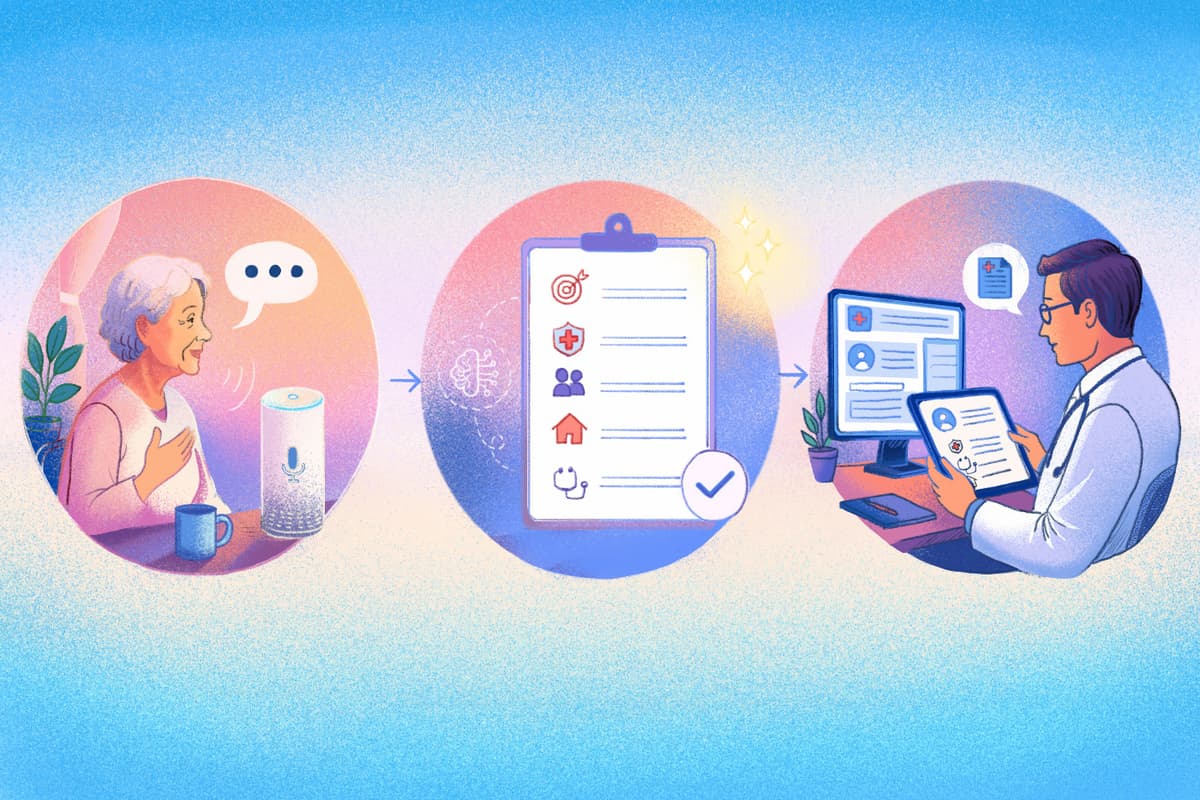
Emergency room physicians face a critical challenge: initiating conversations about end-of-life wishes with seriously ill patients while managing the intense time pressures of acute care. Research from Northeastern University now demonstrates that artificial intelligence voice assistants can help bridge this gap, though significant obstacles remain before widespread clinical use.
The conversation gap in emergency care
When patients arrive at emergency departments with life-threatening conditions, standard medical practice calls for "serious illness conversations" once they're stabilized. These discussions allow physicians and patients to establish care goals and end-of-life preferences before a crisis makes such planning impossible.
Yet only 37 percent of seriously ill older adults report having these conversations with physicians, according to research cited by Smit Desai, an assistant professor at Northeastern's College of Arts, Media and Design. When they do occur, they typically happen just one month before death—often too late to meaningfully shape care decisions.
The result: patients may receive treatments that don't align with their values or undergo interventions they would have declined, potentially prolonging suffering.
Testing AI as a conversation facilitator
Desai and colleagues from Northeastern's Conversational Human-AI Interactions Lab developed an AI voice assistant designed to conduct structured end-of-life discussions. In a pilot study published this month in the Proceedings of the ACM on Human-Computer Interaction, 55 emergency patients participated in AI-guided serious illness conversations.
The results showed promise: 49 patients successfully completed the conversations, and 46 found the system acceptable, meaning they considered the interactions appropriate and felt comfortable participating, according to the research first reported by AI Watch.
The team's earlier work, which included interviews with 11 emergency clinicians, mapped the complete workflow around these sensitive discussions. Emergency physicians typically spend just four to ten minutes per patient while juggling medical records, diagnoses, and treatment plans—leaving little room for extended conversations about care preferences.
Why it matters
This research addresses a structural problem in emergency medicine where time constraints prevent essential patient-centered conversations. If AI systems can reliably facilitate these discussions, they could ensure more patients receive care aligned with their values while reducing administrative burdens on overstretched clinical staff. However, the technology's readiness for deployment remains uncertain.
Significant hurdles before deployment
Despite the encouraging preliminary data, the study exposed both technical and ethical challenges. In one instance, the voice assistant generated what Desai described as a "not very nice" hallucinated response, forcing researchers to terminate the conversation. The team subsequently addressed the underlying issue.
Dakuo Wang, an associate professor with joint appointments at Northeastern, characterized AI's role in hospital settings as inevitable but distant. He estimates actual transformation will take "another decade or so," noting that electronic medical records required decades to achieve widespread adoption after the internet revolution of the 1990s.
Hashibur Rahman, a Northeastern researcher on the study, emphasized that AI should function as "a supportive layer" rather than a replacement for clinicians. The goal is reducing administrative work to create more space for genuine human empathy in emotionally sensitive settings.
Desai stressed that the objective isn't physician replacement but rather streamlining end-of-life care processes to give doctors more direct patient time.
The research was conducted by Northeastern University's Conversational Human-AI Interactions Lab and detailed by AI Watch.
This is an original analysis by the Omega editorial team. Source reporting: AI Watch.
Want systems like this working for your business?
Book a Call