AI Vision Systems Should Precede Robotics in Poultry Plants
Building operational data through machine vision enables smarter automation investments and traces quality issues to equipment failures.
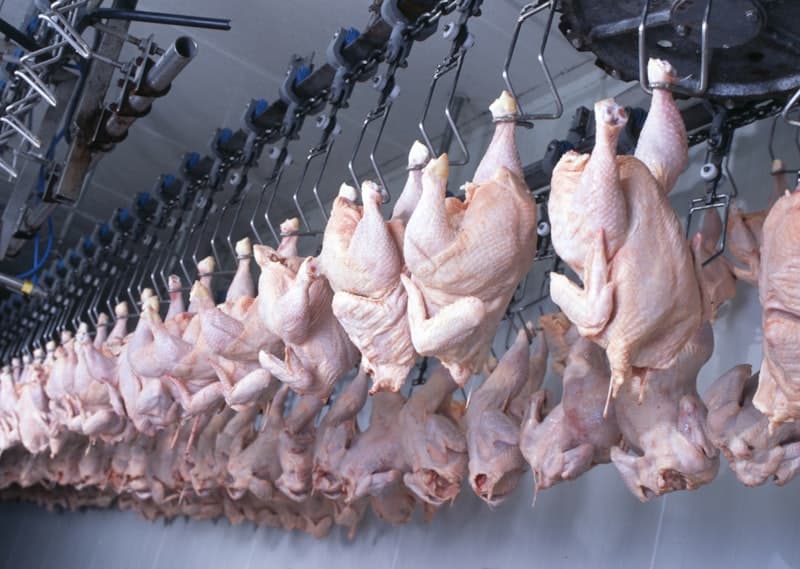
Poultry processors pursuing automation should start with AI-powered machine vision rather than jumping directly to robotics, according to guidance shared during a recent Association for Advancing Automation webinar.
Deploying vision systems first allows plants to accumulate the operational data necessary for informed decisions about where downstream automation will deliver the greatest return. Without that foundation, processors risk scaling existing problems across entire production lines.
"The toughest thing is to deploy automation when you're not ready and don't exactly know what's going on," said Anthony Romeo, product management manager at Oxipital AI, who presented during the webinar. "You've just taken a problem that you've tried to fix with automation and you've now scaled that problem across your entire system."
Why traditional vision systems struggle with poultry
Conventional machine vision performs well with highly repeatable, indexed products but falters when confronted with the organic variability of poultry. No CAD file exists for a chicken wing, and flock characteristics shift year to year, meaning product dimensions and appearance remain inconsistent.
Environmental variables further complicate detection. Changes in ambient lighting, shadows across conveyors, or even switching belt colors can degrade accuracy and generate false readings. Processors have historically addressed these limitations by installing singulation equipment that vibrates and orients product before imaging, but these systems consume significant floor space and demand intensive maintenance.
Modern AI-based vision platforms overcome these challenges through deep learning models trained on extensive datasets. These systems recognize products they haven't previously encountered because training has exposed them to thousands of variations.
Why it matters
Poultry processors face mounting pressure to automate amid persistent labor shortages, but premature capital deployment can amplify rather than solve operational problems. Vision systems generate defect data that reveals upstream equipment failures—such as dull saw blades causing trim issues—allowing plants to address root causes before investing in robotics. This data-driven approach helps operations teams right-size automation investments and avoid costly misallocations of capital.
Defect tracking reveals equipment problems
Once operational, vision systems generate data that extends beyond flagging individual defects like woody breast or foreign objects. Tracking defect rates by type and time of day enables operations teams to identify patterns pointing to upstream equipment issues. A spike in low-trim defects on a breast line, for instance, may indicate a dull blade rather than a systemic process failure.
Vision platforms can trigger automated alerts when defect patterns emerge. If consecutive pieces display the same defect, the system notifies maintenance staff or signals upstream equipment to adjust, compressing the interval between problem development and corrective action.
Plant-floor control without retraining models
Aligning what a model detects with what an operation considers actionable remains a persistent challenge. Fat trim tolerance varies by customer specification and product type—the same detected fat area may constitute a defect for one buyer but fall within acceptable range for another.
Current platforms address this by separating the underlying detection model from the inspection rules applied to it. Plant personnel can configure defect thresholds and adjust dimensional tolerances without modifying or retraining the model. Pick-order priorities for robotic arms can be adjusted through recipe-style interfaces without writing code, and on multi-robot lines, different pick strategies can be assigned to individual arms based on line position.
These details were first reported by Automation Watch.
This is an original analysis by the Omega editorial team. Source reporting: Automation Watch.
Want systems like this working for your business?
Book a Call