AI Tools Are Eroding Professional Skills, New Studies Show
Research in medicine and software engineering reveals measurable declines in human expertise when workers rely on artificial intelligence systems.
Evidence mounts for AI-driven skill erosion
Artificial intelligence tools are beginning to degrade the professional capabilities of the people who use them, according to new research spanning medicine and software engineering. The phenomenon, known as deskilling, represents an emerging challenge as AI systems become standard workplace technology.
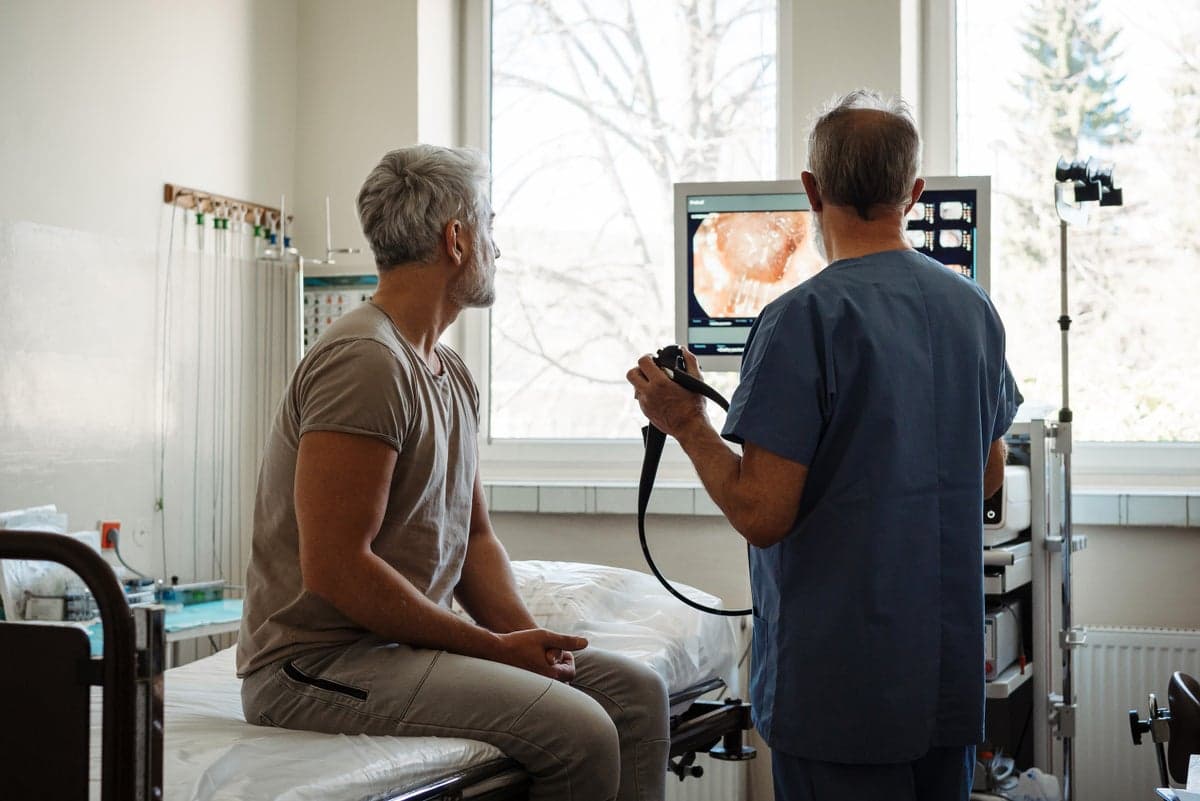
Two recent studies provide concrete evidence of the problem. In one trial, experienced endoscopy physicians in Poland who had each performed more than 2,000 colonoscopies saw their adenoma detection rates fall from 28.4% to 22.4% after they began using an AI diagnostic assistant — but only during procedures when the AI was unavailable. The decline occurred within just three months of initial AI exposure, according to findings published in The Lancet Gastroenterology and Hepatology.
In a separate randomized trial conducted by Anthropic, software engineers who used an AI coding assistant during a programming task scored an average of 50% on a subsequent comprehension quiz, compared to 67% for engineers who completed the same task without AI help. The AI-assisted group performed particularly poorly on questions requiring them to diagnose code errors, suggesting they had failed to internalize the underlying concepts.
Why it matters
These findings arrive as healthcare workers express widespread concern about AI dependency — 77% of physicians and 70% of nurses worry about losing skills due to over-reliance on AI systems, according to a recent U.S. survey. The research validates those fears and raises questions about how organizations should integrate AI tools without compromising the development and retention of human expertise, particularly among early-career professionals who traditionally build foundational skills through hands-on work.
The cognitive outsourcing problem
Researchers emphasize that AI represents a fundamentally different type of automation than previous technologies. While GPS systems eliminated the need for certain navigation skills, generative AI tools are "the first technology that automates various cognitive faculties around thinking and interpretation, which were long considered unique human skills," according to Tapani Rinta-Kahila, an information systems researcher at the Hanken School of Economics in Helsinki.
Rinta-Kahila's 2018 study of accountants who used automated systems for over a decade found they had forgotten how to perform routine tasks when the tools were removed. He predicts similar effects across knowledge-intensive professions as AI handles tasks that once provided learning opportunities for junior staff.
Kevin Crowston, an information scientist at Syracuse University, describes the challenge as "a very odd disconnect between performance and learning" — workers can produce high-level output by borrowing AI capabilities without developing those skills themselves.
No established solutions yet
Yuichi Mori, a physician-researcher at the University of Oslo and co-author of the endoscopy study, notes that "there is no established solution against deskilling right now" and calls it a critical research priority for the coming decade.
Experts recommend that workers maintain awareness of how much cognitive work they're offloading to AI, understand the limitations of these systems, and avoid accepting AI outputs without critical evaluation. Organizations may need to design training programs that deliberately preserve opportunities for skill development even as AI tools handle routine tasks.
These findings were first reported by Scientific American, with the endoscopy research originally published in October 2025 and the Anthropic coding study posted as a preprint ahead of peer review.
This is an original analysis by the Omega editorial team. Source reporting: AI Watch.
Want systems like this working for your business?
Book a Call