AI Suppressing Wages More Than Cutting Jobs, Apollo Finds
Workers in high-AI-exposure occupations saw wage growth lag by 6.7% compared to peers in less-exposed roles, new research shows.
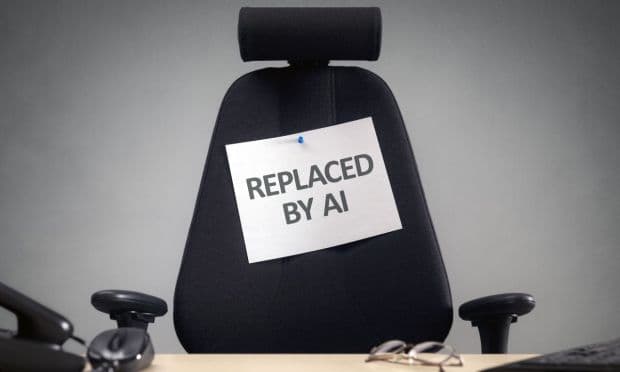
AI's Labor Market Impact Shows Up in Paychecks, Not Headcount
Artificial intelligence is reshaping the labor market in ways that don't show up in employment statistics. New research from Apollo Global Management finds that AI is suppressing wage growth for exposed workers rather than eliminating their jobs outright.
Torsten Slok, Apollo's chief economist, and researcher Sania Edlich analyzed roughly 300 occupations, dividing them into high- and low-AI-exposure categories. They compared wage trajectories before and after ChatGPT's launch in late 2022. Workers in high-exposure roles saw wages grow 6.7% more slowly than their counterparts in positions with minimal AI interaction, according to findings Slok shared with Bloomberg News on Aug. 22.
The wage suppression effect hit lower-income workers hardest, the research showed. Yet Slok noted a counterbalancing trend: AI has fueled a surge in business formation, which now sits at record levels. The technology enables entrepreneurs to develop concepts and launch ventures more efficiently through AI agents and automated workflows.
Why it matters
This research reframes the AI employment debate. While headlines focus on job displacement fears, the more immediate economic effect may be wage stagnation for millions of workers whose roles involve AI-augmented tasks. For businesses, this suggests AI adoption creates competitive pressure on labor costs without triggering the mass layoffs some predicted. For workers, especially those earning lower incomes, it signals that AI exposure may limit earning power even as jobs persist.
Conflicting Signals in the Data
The Apollo findings add complexity to an unsettled picture of AI's workforce impact. A Bureau of Labor Statistics report examined 18 AI-exposed occupations through May 2025, finding a modest 0.2% job decline year-over-year, while overall payrolls grew 0.8%. Goldman Sachs economists reported in May that fields with high AI substitution potential experienced steeper drops in job openings compared to other sectors.
Separate research from PYMNTS Intelligence examined Labor Economy workers—those earning up to $25 hourly or under $50,000 annually. That study found 37% of these workers reported their employers introducing new AI or automation tools within the past year. However, lower-income employees received less training, expressed lower confidence in adapting to new systems, and had thinner financial cushions to weather disruption.
The PYMNTS research highlighted AI's expansion beyond tech hubs into warehouses, restaurants, hospitality, logistics, and caregiving—sectors that account for substantial consumer spending and employ millions of Americans.
Business Formation as a Counterweight
Slok emphasized that AI's productivity gains are enabling more people to launch businesses, potentially offsetting wage pressure through entrepreneurship. The technology lowers barriers to entry by automating tasks that previously required specialized skills or significant capital investment. Whether this entrepreneurial surge can compensate for wage suppression across the broader labor force remains an open question as AI adoption accelerates.
The details were first reported by Bloomberg News and PYMNTS.
This is an original analysis by the Omega editorial team. Source reporting: AI Watch.
Want systems like this working for your business?
Book a Call
