AI Power Demand Threatens Grid Stability, Rate Hikes
Voluntary pledges from industry won't solve the structural challenges of surging electricity costs and reliability risks driven by data center expansion.
Voluntary pledges mask deeper infrastructure crisis
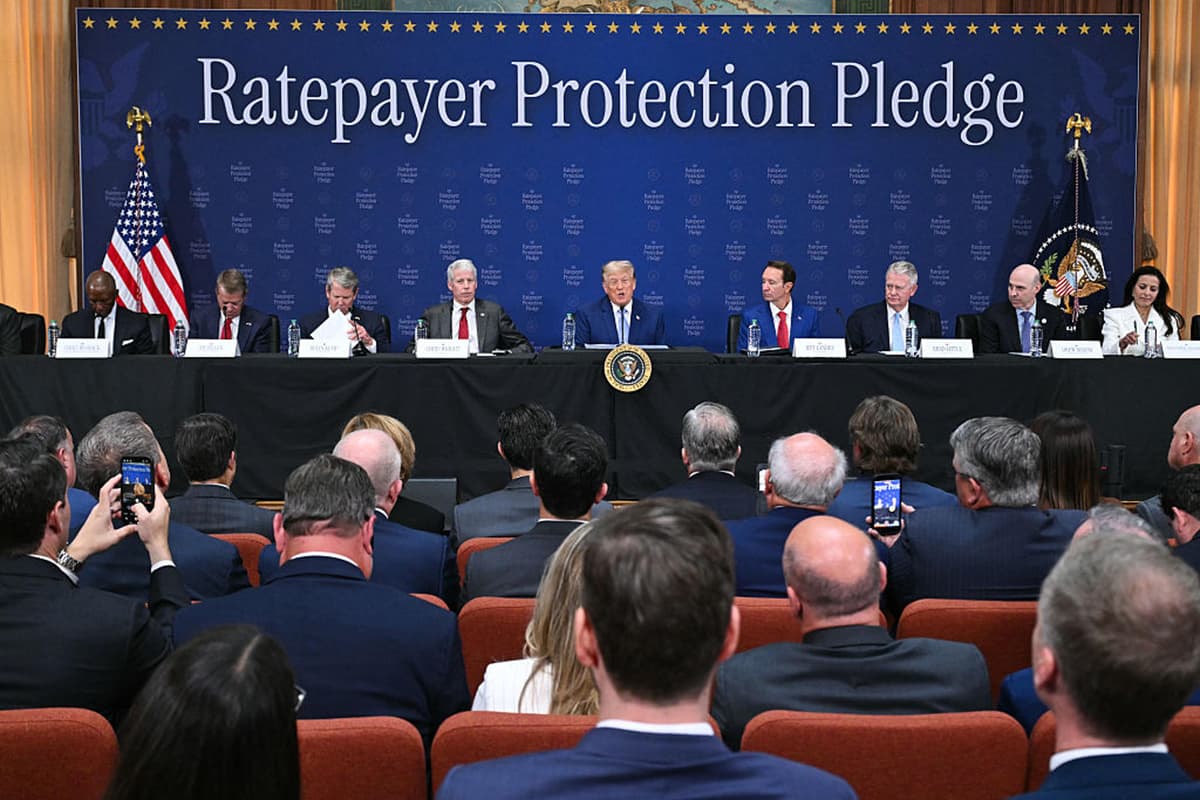
President Trump convened more than 200 stakeholders—including governors, utility companies, and data center developers—at the Environmental Protection Agency this week to announce a Ratepayer Protection Pledge aimed at shielding consumers from rising electricity costs. The voluntary commitment, which carries no enforcement mechanism, represents an attempt to address growing anxiety over power bills that have climbed in part due to AI-driven infrastructure expansion.
The pledge amounts to incremental tinkering rather than substantive policy action, according to energy policy experts. Without decisive intervention, today's targeted fixes may prove inadequate when faced with the scale of demand growth ahead.
The case for fundamental restructuring
At the Aspen Ideas Climate summit in Chicago two days before Trump's announcement, former Federal Energy Regulatory Commission member Allison Clements advocated for regulatory adjustments to insulate customers from data center costs. University of Chicago economist Michael Greenstone countered with a more ambitious vision: using this moment to reimagine the country's inefficient electricity system, including rate design and federal transmission authority. "One should not waste a crisis," he said.
The political environment makes such wholesale reform seem improbable. Congress struggles with basic functions, let alone complex power system overhaul. Yet the groundwork for larger changes may be necessary as the system faces mounting pressure.
Short-term politics versus long-term reliability
Elected officials are responding to affordability concerns with measures that prioritize immediate rate relief over future grid stability. PJM, the Mid-Atlantic grid operator, implemented price caps on utility electricity bids despite warnings the move could discourage investment. Indiana's governor removed the state utility commission head after approving rate increases. The political incentive structure favors keeping bills low today even when doing so complicates tomorrow's reliability challenges.
The system currently holds together, but extreme weather events—severe heat waves or winter freezes—could push demand beyond available supply. Rolling blackouts would trigger intense political backlash.
"I can tell you with absolute certainty that if a grid operator has to choose on the hottest day of summer, whether to send power to a data center to run AI 24/7 or to a residential household that needs air conditioning, it's going to that data center," says Neil Chatterjee, a former FERC commissioner. "And that's where the pitchforks come out."
Why it matters
A grid crisis could create political conditions for reforms that have stalled for years—from permitting changes that accelerate energy infrastructure construction to revisions of the century-old Federal Power Act governing interstate transmission. Such restructuring would reshape utility business models, potentially benefit climate goals by enabling clean power transmission, and affect AI companies' expansion plans. The question is whether policymakers will prepare for this opportunity or react only when the system fails.
These details were first reported by TIME.
This is an original analysis by the Omega editorial team. Source reporting: AI Watch.
Want systems like this working for your business?
Book a Call
