AI Patent Applications Face 42% Eligibility Rejection Rate
New USPTO data shows artificial intelligence inventions hit Section 101 hurdles six times more often than conventional patents.
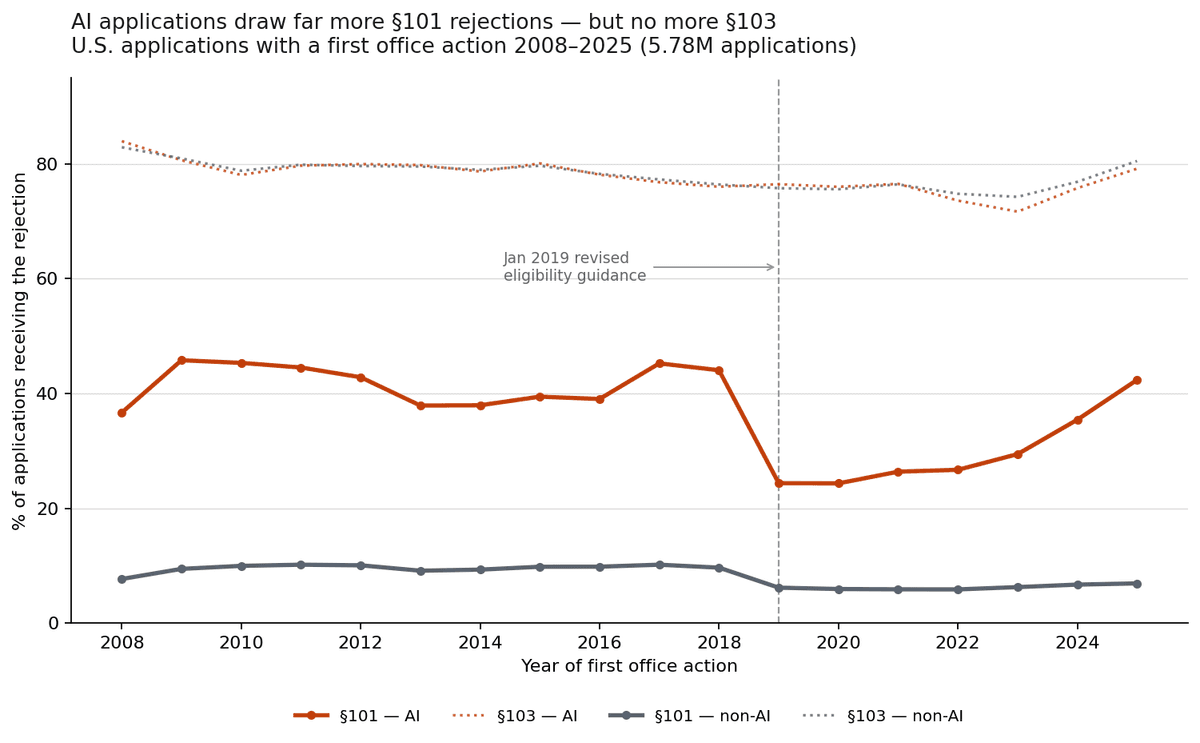
AI Patents Face Mounting Eligibility Challenges
Artificial intelligence patent applications are encountering Section 101 eligibility rejections at dramatically higher rates than conventional inventions, according to new analysis of United States Patent and Trademark Office data.
Among patent applications that received their first office action in 2025, 42% of those containing AI technology drew a Section 101 rejection for failing to claim patent-eligible subject matter. By contrast, only 6.9% of applications without AI components faced the same hurdle—a sixfold difference in rejection rates.
The analysis, conducted by patent law expert Dennis Crouch using the USPTO's AI-patent classifier system, reveals a troubling trend for companies investing heavily in artificial intelligence innovation. The classifier was created by the USPTO several years ago specifically to track AI-related patent activity.
Temporary Gains Have Evaporated
The data shows that USPTO guidance issued before the COVID-19 pandemic—the Revised Patent Subject Matter Eligibility Guidance—initially cut AI eligibility rejection rates roughly in half. However, by 2025, that improvement has essentially disappeared, with rejection rates climbing back toward historical highs.
Crucially, this increase appears isolated to AI patents. The eligibility rejection rate for non-AI applications has remained stable and low during the same period, suggesting the shift reflects either changes in what AI applicants are filing or evolving examination practices at the USPTO specifically for AI inventions.
One bright spot: obviousness rejections under Section 103 show no meaningful difference between AI and non-AI applications. Both categories hover near 80%, indicating that AI patents don't face unusual scrutiny on prior art grounds—only on the fundamental question of whether the invention qualifies as patentable subject matter at all.
Why It Matters
The widening gap in eligibility rejections creates significant uncertainty for companies building AI products and platforms. Patent protection remains a critical tool for securing investment, establishing market position, and defending against competitors. When four in ten AI patent applications face eligibility challenges—compared to fewer than one in fifteen conventional applications—companies must budget more time, legal resources, and risk into their intellectual property strategies. The data suggests that either AI applicants are pushing boundaries the USPTO considers abstract, or examiners are applying stricter standards to AI claims than to other technologies. Either way, organizations filing AI patents should prepare for extended prosecution and potentially narrower claim scope.
Unanswered Questions
Crouch notes that the available data cannot definitively explain whether the rising rejection rate stems from changes in what applicants are submitting or shifts in how USPTO examiners evaluate AI inventions. Both factors likely play a role, but their relative contributions remain unclear.
The findings were first reported by Dennis Crouch on PatentlyO, drawing on USPTO classification data tracking AI patent activity through 2026.
This is an original analysis by the Omega editorial team. Source reporting: AI Watch.
Want systems like this working for your business?
Book a Call