AI Monitors Construction Workers for Heat Stress in Real Time
Arizona State researchers deploy biosensors and machine learning to prevent heat illness on jobsites before symptoms appear.
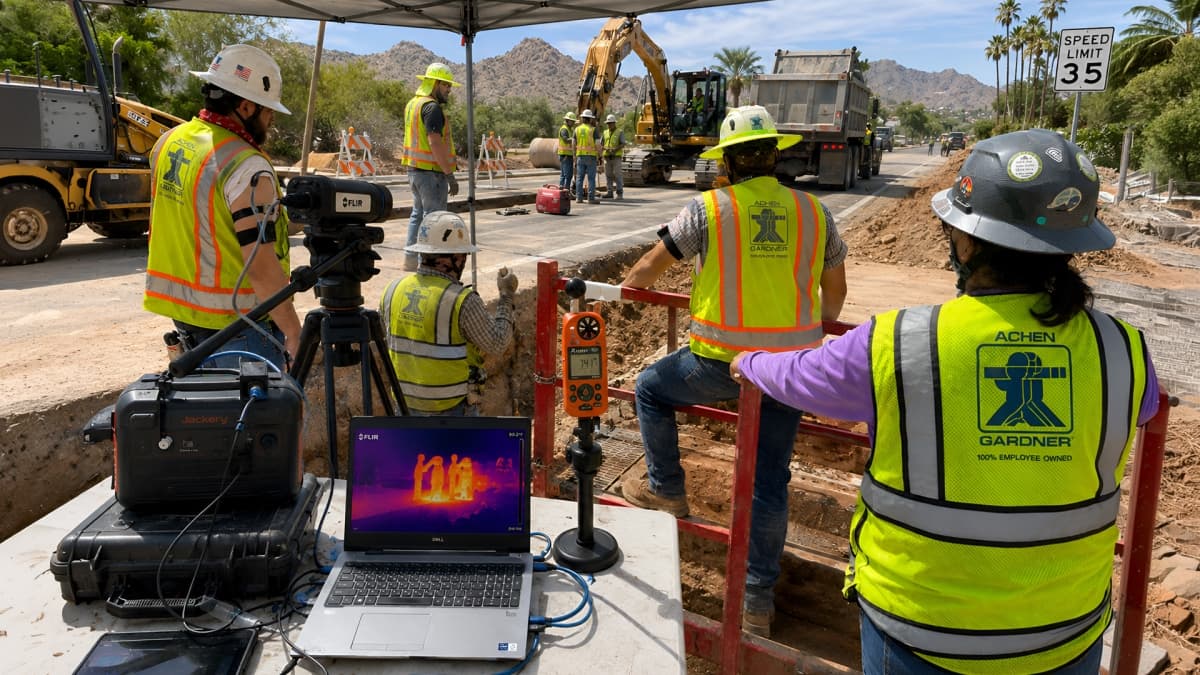
Construction workers in Arizona now have AI watching their backs — literally. A heat stress early-warning system developed at Arizona State University analyzes data from wearable biosensors and environmental monitors to detect fatigue and heat stress before workers show symptoms.
The system, built by ASU's Safety Automation and Visualization Environment Laboratory in partnership with three Arizona construction firms, sends personalized alerts when conditions turn dangerous. It's a shift from reactive incident response to proactive prevention, says Siyuan Song, the associate professor of construction engineering who leads the SAVE Lab.
Why it matters
Heat-related illness remains one of the leading causes of death among construction workers, particularly in hot climates. Traditional safety protocols rely on visible symptoms or scheduled breaks, but AI-powered monitoring can identify risk factors unique to individual workers — accounting for differences in physiology, hydration, and workload — before dangerous thresholds are crossed. The technology demonstrates how machine learning can address occupational hazards that human observation alone cannot catch.
Beyond heat: AI across construction safety and training
The heat stress system represents one application in a broader research effort at ASU's School of Sustainable Engineering and the Built Environment. Researchers are deploying AI across multiple dimensions of construction work:
Virtual reality safety training: The SAVE Lab creates immersive VR environments to study how workers learn and respond to hazards. The team also uses large language models to analyze accident reports and evaluate the effectiveness of safety training programs.
Multimodal worker monitoring: Shiva Pooladvand, an assistant professor of construction engineering, analyzes data captured from workers and their environments to identify patterns in decision-making and behavior. The goal is to anticipate unsafe conditions and enable personalized interventions that improve both safety and productivity.
Enhanced learning environments: Ricardo Eiris, an assistant professor of construction management, combines AI with virtual reality, digital twins, and drones to expand how students and workers learn about construction sites beyond the constraints of physical classrooms.
Preparing students for AI-augmented construction
Faculty members are redesigning curricula as AI capabilities advance rapidly. Kenn Sullivan, a professor of construction management, watched AI tools go from completing almost none of his class assignments to handling up to 60 percent of them in just nine months. That forced a rethink of how he assesses learning.
In his AI in Construction course, students now build custom AI workflows and working applications, creating portfolio websites to showcase their solutions. Other courses teach students to verify AI-generated information and apply engineering judgment to evaluate outputs.
"Responsible AI use is essential in our field for a simple reason: In construction, decisions have physical consequences," Song says. "An unverified AI output in a safety plan, cost estimate or schedule is a potential hazard to people and projects."
The emphasis on practical applications was evident at the recent AI for Construction 2026 Contractors Summit, where construction leaders shared how they use AI in business development, virtual design, safety analysis, and project controls. The event was hosted by ASU's Del E. Webb School of Construction and the new AI in Construction Consortium.
These details were first reported by Arizona State University News.
This is an original analysis by the Omega editorial team. Source reporting: AI Watch.
Want systems like this working for your business?
Book a Call