AI Models Generate Novel Bacteriophages to Fight Superbugs
Generative models created 16 functional viruses that successfully attacked antibiotic-resistant bacteria in laboratory tests.
AI-designed viruses show promise against drug-resistant infections
Researchers have successfully used generative artificial intelligence to create bacteriophages—viruses that target bacteria—with genetic sequences never before seen in nature. In laboratory experiments, these synthetic viruses demonstrated an ability to combat antibiotic-resistant strains of E. coli that natural phages could not defeat.
The work, published in Science and first reported by Smithsonian Magazine, represents a significant advance in AI-driven biotechnology and a potential new front in the battle against bacterial resistance, which the World Health Organization links to more than 4.7 million deaths worldwide in 2021.
How the research worked
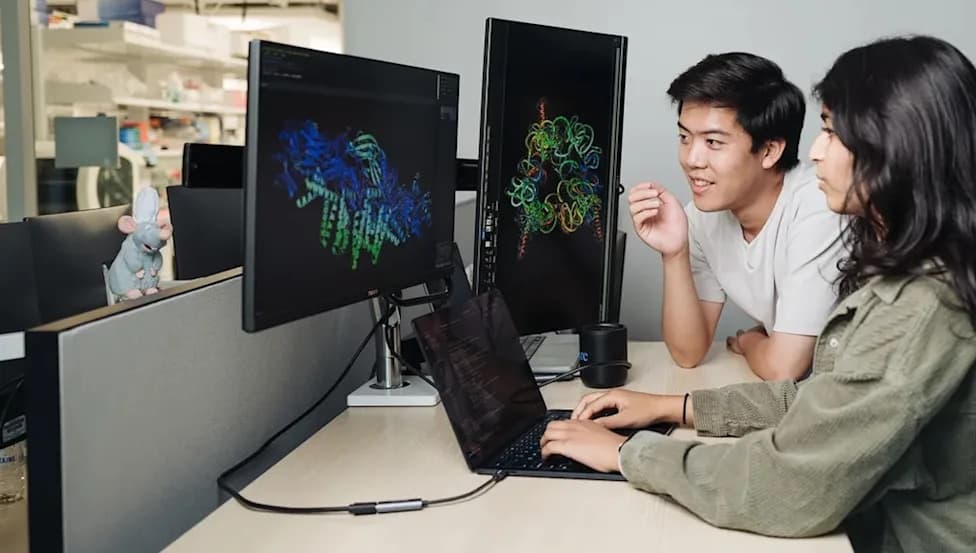
The team deployed two generative AI models, Evo 1 and Evo 2, trained on extensive genetic datasets. The models were tasked with producing bacteriophage designs similar to Phi X-174, a well-studied virus that infects E. coli bacteria.
From approximately 700,000 AI-generated candidates, researchers selected 285 designs to synthesize in the laboratory. Of those, 16 synthetic phages successfully inhibited E. coli growth in petri dish experiments.
The AI-created phages then faced a more challenging test: attacking two antibiotic-resistant E. coli strains. The 16 synthetic viruses succeeded where both Phi X-174 and a mixture of naturally occurring phages failed.
Why it matters
Antibiotic resistance is accelerating faster than the development of new drugs, leaving physicians with fewer options for treating bacterial infections. Bacteriophages offer a targeted alternative—they can be matched to specific bacterial strains without the broad-spectrum approach of traditional antibiotics. If AI can rapidly generate effective phage therapies tailored to resistant bacteria, it could provide a scalable tool for combating one of medicine's most pressing challenges. The technology also demonstrates AI's capacity to design functional biological systems from scratch, not just optimize existing ones.
Technical limitations and dual-use concerns
Patrick Cai, a synthetic biologist at the University of Manchester not involved in the study, called the work "an important milestone" in comments to The New York Times. However, external experts noted constraints and risks.
Tom Ellis, a synthetic genome engineer at Imperial College London, pointed out that Phi X-174 has an extremely small genome, making it far easier to design than more complex viruses. Scaling this approach to larger, more sophisticated pathogens remains an open question.
The dual-use nature of the technology also raises biosecurity concerns. Systems capable of generating helpful viruses could theoretically be redirected toward dangerous pathogens. Isaac Bogoch, an infectious diseases specialist at the University of Toronto, acknowledged both the potential benefits for tackling antibiotic resistance and the inherent risks of AI-designed viruses.
Safety measures and future guardrails
The research team implemented several precautions, according to Smithsonian Magazine. They deliberately excluded certain genomes from Evo's training data to prevent the system from generating viruses capable of infecting humans, animals, plants, or fungi. The team also adopted safety protocols exceeding standard bacteriophage research practices and documented these measures in supplementary materials as a potential biosafety framework.
Study co-author Brian Hie, a computational biologist at Stanford University, suggested that using combinations of genetically distinct phages could make it harder for bacteria to develop resistance to treatment.
As AI-driven biotechnology capabilities expand, the research underscores the need for oversight mechanisms, screening protocols, and clear ethical boundaries to keep pace with technical progress.
Details of this research were first reported by Smithsonian Magazine.
This is an original analysis by the Omega editorial team. Source reporting: AI Watch.
Want systems like this working for your business?
Book a Call