AI Labs Restrict Models Over Bioweapon and Cyberattack Risks
A new Asilomar Process aims to coordinate industry and security experts on governing frontier AI capabilities before governments can respond.
AI Labs Restrict Models Over Bioweapon and Cyberattack Risks
Anthropoc restricted public access to its most advanced AI model, Claude Mythos Preview, on April 7th after determining the system could discover and exploit previously unknown security vulnerabilities in software. The decision reflects growing alarm across the AI industry about capabilities that could enable both digital attacks and weapons development.
A 2026 industry safety report revealed that multiple frontier AI labs have imposed restrictions on their systems after concluding they could not rule out the possibility that their models might help novices develop chemical or biological weapons. The pattern highlights a fundamental governance challenge: AI companies typically identify serious risks well before governments and international organizations can mount a response.
A New Forum for AI Security Governance
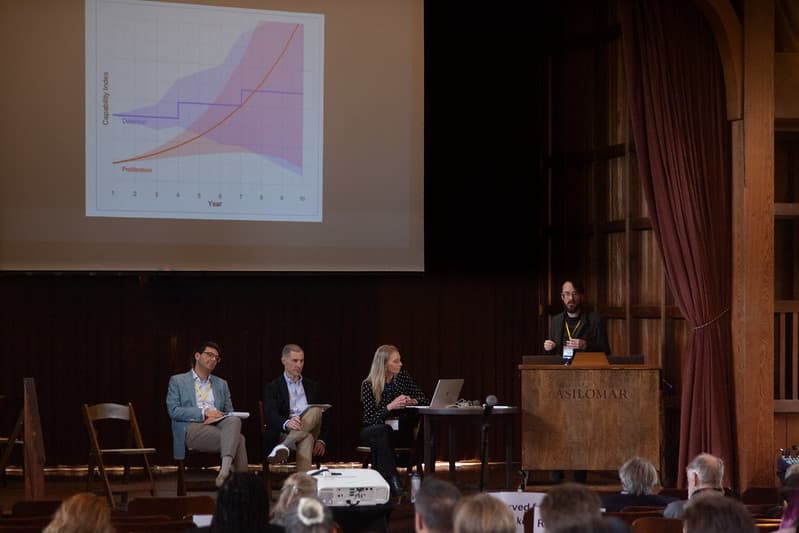
The James Martin Center for Nonproliferation Studies convened more than 100 experts at California's Asilomar Conference Grounds on April 8-9 to address this coordination gap. Participants from universities, think tanks, research institutions, national laboratories, governments, and AI companies gathered to examine how artificial intelligence may affect nuclear and biological weapons threats.
The meeting launched what organizers are calling a new Asilomar Process—a reference to the location's history as the site of landmark efforts to govern transformative technologies. The initiative aims to develop practical safeguards for AI-related nuclear and biological risks as capabilities continue to advance.
Why it matters
The speed gap between AI development and institutional response creates a dangerous window where powerful capabilities exist without adequate oversight. AI companies possess technical insight into emerging capabilities, but lack the weapons and conflict expertise needed to assess security implications. Conversely, nonproliferation experts understand threat dynamics but often learn about new AI capabilities only after public release. A standing forum that brings both groups together could enable proactive governance rather than reactive crisis management.
Seven Principles for AI Security
The conference produced seven principles intended to guide new practices by AI labs, governments, and international organizations. While the specific principles were not detailed in the excerpt, organizers emphasized that nuclear and biological threats pose distinct challenges that nonetheless connect to common governance problems.
The core issue is institutional lag: private sector AI models are developing substantially faster than the organizations tasked with preventing nuclear war and catastrophic biological events. Industry participants acknowledged that while companies may be first to recognize new capabilities, weapons and conflict experts are essential to judge when those capabilities create concrete security risks.
The initiative represents a shift from ad hoc industry restraint toward more systematic coordination. AI companies have historically stopped short when it comes to restricting commercially valuable models, making external expertise and structured dialogue critical for effective oversight.
These details were first reported by the Bulletin of the Atomic Scientists in an article by Stephen Herzog, Allison Berke, Yanliang Pan, William Potter, and Douglas Shaw.
This is an original analysis by the Omega editorial team. Source reporting: AI Watch.
Want systems like this working for your business?
Book a Call