AI Infrastructure Boom Fueled by Off-Balance-Sheet Debt
Special purpose vehicles and complex financing structures are spreading AI buildout risk across the financial system, raising questions about stability.
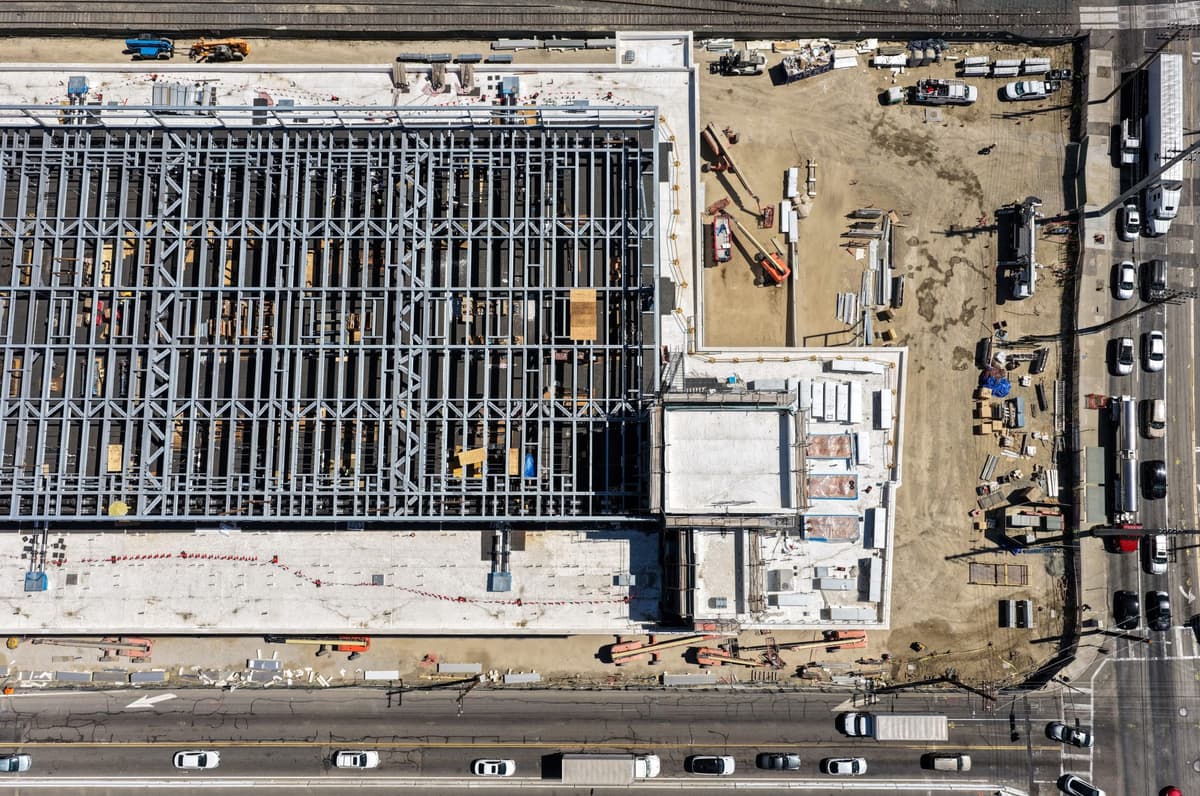
The hidden financing behind AI's physical infrastructure
The artificial intelligence revolution requires more than algorithms and data—it demands an unprecedented physical buildout of data centers, semiconductors, and power infrastructure. That expansion is increasingly financed through debt structures designed to sit outside corporate balance sheets, distributing risk across the financial system in ways that echo previous credit cycles.
According to a report first published by GIS Reports Online, global spending on AI-related data centers could reach $7 trillion by 2030. Five major hyperscalers—Amazon, Alphabet, Meta, Microsoft, and Oracle—issued a record $121 billion in debt during 2025, more than quadruple their average annual borrowing between 2020 and 2024.
Why it matters
The AI sector's reliance on complex financing structures raises systemic questions. If demand growth disappoints or valuations correct sharply, losses could surface far from their origin—in pension funds, insurance portfolios, and institutional investors who now hold repackaged AI infrastructure debt. Unlike previous tech booms concentrated in equity markets, this buildout is fundamentally a credit story, with exposure dispersed through instruments that obscure the total leverage accumulating across the sector.
Special purpose vehicles keep debt invisible
Much of the AI infrastructure financing flows through special purpose vehicles that own the underlying assets—land, facilities, servers, and equipment—while technology companies lease capacity under long-term contracts. The SPV carries the debt; the company makes lease payments that service it.
The Bank for International Settlements describes these arrangements as "shadow borrowing." While SPVs have financed infrastructure projects for decades, their expanding role in AI makes it difficult to assess total sector leverage when billions in obligations remain outside conventional debt metrics.
Banks distribute risk as exposure mounts
Major lenders including JPMorgan Chase, Morgan Stanley, and Japanese banks SMBC and MUFG are approaching internal exposure limits on data-center debt, according to reporting cited by GIS Reports Online. Their response follows a familiar pattern: syndicate loans across multiple institutions, sell portions to non-bank investors, and use significant risk transfer instruments to move credit risk off balance sheets.
Part of this lending is subsequently repackaged into collateralized loan obligation structures, further diffusing exposures. The Bank of England has noted this progression, which makes it harder to identify where risk ultimately resides.
Circular capital flows fuel demand
The sector's growth is amplified by interconnected investments. Nvidia, the dominant AI chip designer, has taken equity positions in companies including OpenAI, CoreWeave, Nebius, and Anthropic—firms whose expansion drives demand for Nvidia's products. One company's investment becomes another's revenue, creating what industry observer Stefano Mainetti calls "closed circuits" that facilitate "sophisticated demand engineering."
Profitability remains elusive
Valuations have surged even as many AI companies remain deeply unprofitable. OpenAI, valued at roughly $850 billion, is estimated to have lost $21 billion at the operating level in 2025 while generating approximately $13 billion in revenue. CEO Sam Altman has discussed infrastructure commitments reaching $1.4 trillion over eight years—ambitions that require sustained, dramatic revenue growth with little margin for disappointment.
Wall Street enters the infrastructure business
In August 2026, Nvidia announced partnerships with Apollo, BlackRock, Blackstone, Brookfield, Goldman Sachs, and KKR to establish compute-financing platforms targeting more than $500 billion in third-party capital. The agreements represent memorandums of understanding with structures still undefined, but they signal a fundamental shift: AI infrastructure is becoming a financial asset class, with major asset managers and private-credit investors moving directly into the sector.
This financialization distributes risk across the system while potentially making any future downturn less contained. Governments, viewing AI as strategically critical, may ultimately absorb losses through initiatives like Washington's Stargate program or the EU's AI Invest—shifting costs from companies to investors to taxpayers.
These details were first reported by GIS Reports Online in their analysis of AI infrastructure financing.
This is an original analysis by the Omega editorial team. Source reporting: AI Watch.
Want systems like this working for your business?
Book a Call
