AI-Generated Video Falsely Shows Iranian Troops Downing US Helicopter
A widely shared clip depicting the June 2026 Apache downing contains visual errors and tested positive for fabrication by detection tools.
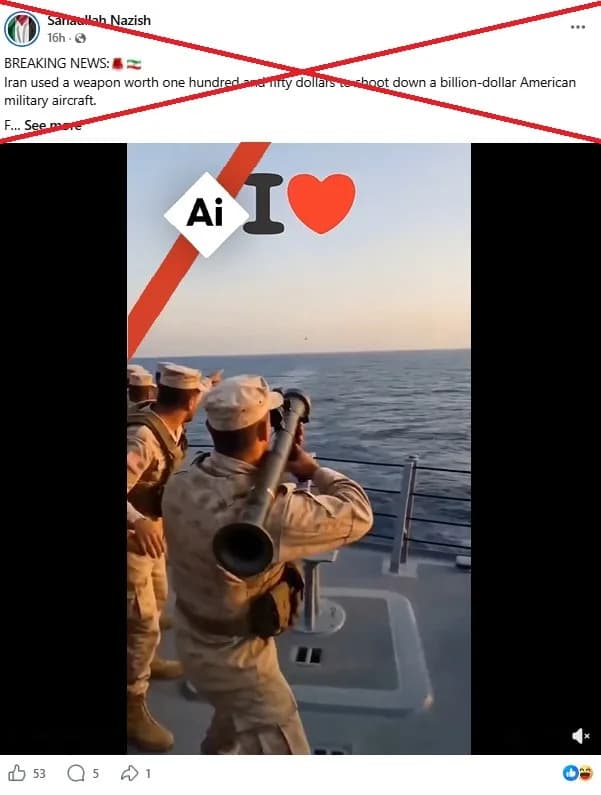
A video circulating on social media purporting to show Iranian troops shooting down a US military helicopter during June 2026 hostilities has been identified as AI-generated fabrication, according to analysis by AFP.
The clip, which spread rapidly after President Donald Trump confirmed on June 9 that Iran had shot down a US Apache helicopter, shows a soldier firing a shoulder-mounted missile at an aircraft. One Facebook post sharing the video accumulated significant engagement with claims that "Iran used a weapon worth one hundred and fifty dollars to shoot down a billion-dollar American military aircraft."
Detection reveals fabrication
The video contains multiple visual anomalies that indicate artificial generation. Notably, one soldier in the footage wears a uniform patch displaying the US flag—an obvious inconsistency for footage purportedly showing Iranian forces.
AFP submitted the clip to DeepFake-O-Meter, an AI detection tool developed by the University of Buffalo. Three of the tool's detection models returned a "high" probability that the video was artificially generated.
Additionally, the video contradicts official accounts of the incident. US defense officials told media outlets that the Apache was downed by an Iranian drone, not by a shoulder-mounted weapon as depicted in the fabricated clip.
The actual incident
US Central Command confirmed that an Apache helicopter went down near the coast of Oman during operations in June 2026. Both crew members were rescued by American forces. The incident marked the second crewed US aircraft lost to Iranian fire during the Middle East conflict, following an F-15 fighter plane shot down in April.
The United States launched retaliatory strikes against Iran following the helicopter downing. Trump initially announced plans for additional strikes on June 11 but subsequently called them off. Three days later, on June 14, the United States and Iran reached a peace agreement ending military operations across all fronts, concluding more than three months of warfare in the region.
Why it matters
The rapid spread of AI-generated military footage during active conflicts represents a significant challenge for information integrity. Fabricated videos can inflame tensions, spread disinformation about military capabilities, and undermine public understanding of actual events. As generative AI tools become more accessible, distinguishing authentic combat documentation from synthetic media requires both technical detection tools and critical analysis of visual inconsistencies. The incident underscores the need for verification protocols when consuming conflict-related content on social media platforms.
These details were first reported by AFP, which conducted the AI detection analysis and identified the visual anomalies in the circulating video.
This is an original analysis by the Omega editorial team. Source reporting: AI Watch.
Want systems like this working for your business?
Book a Call