AI-Generated Images Falsely Show Duterte in ICC Courtroom
Fabricated photos depicting the former Philippine president appearing frail at trial spread widely despite him never physically attending a hearing.
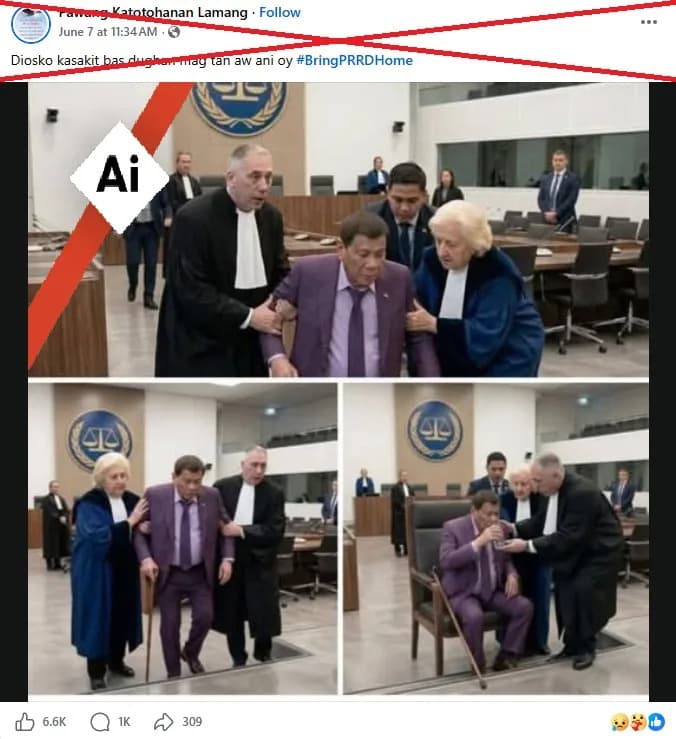
Fabricated images purporting to show former Philippine President Rodrigo Duterte appearing frail inside an International Criminal Court courtroom have circulated widely on social media, despite the fact that he has never physically attended a hearing at The Hague.
The synthetic images, which were flagged by Google's SynthID detection tool as containing digital watermarks from the company's AI generation systems, depict Duterte using a walking stick and being assisted to his seat. They spread rapidly across Facebook and other platforms following a June 12 ICC decision ordering a new medical assessment of Duterte's fitness to stand trial.
The fabricated courtroom scenes
The images appear to show Duterte with his legal counsel Peter Haynes and presiding Judge Joanna Korner inside an ICC courtroom. Social media users responded as if the photos were authentic, with comments expressing sympathy for the former president's apparent physical condition.
One Facebook post sharing the images garnered significant engagement with the caption "My God, it pains my heart to see this" in Visayan, accompanied by the hashtag "Bring PRRD Home."
The images originated from a Facebook page that regularly posts AI-generated content featuring Duterte and his family. While the original post initially lacked any disclaimer, an "AI-GENERATED IMAGE" notice was added to it on June 13, according to the post's edit history.
Visual inconsistencies reveal manipulation
Beyond the digital watermarks detected by Google's tool, the images contain visual artifacts that indicate synthetic generation. The courtroom layout does not match official photographs and video of actual ICC chambers. Details such as chair placement and room configuration differ significantly from documented court proceedings.
According to AFP reporting, Duterte is unlikely to ever appear at the Hague-based court in person. Judges have granted him leave of absence at every hearing to date. His only appearance since arrest and transfer was via video link on March 14, 2025, during which he appeared confused and tired with barely audible speech.
The underlying legal proceedings
Duterte faces crimes against humanity charges linked to his anti-drug campaign, which prosecutors allege killed thousands of suspected drug pushers and users during his time as Davao City mayor and later as Philippine president. His new lead counsel, British barrister Haynes, argued in May that Duterte was not fit to stand trial. Judge Korner approved the prosecution's request to proceed while ordering an additional fitness assessment before trial begins.
Why it matters
The spread of AI-generated courtroom images demonstrates how synthetic media can exploit emotionally charged legal proceedings to manipulate public perception. As high-profile international trials increasingly occur remotely or with limited public access, fabricated visuals can fill information gaps and shape narratives around defendants' conditions and treatment. The incident underscores the growing challenge of verifying visual evidence in the AI era, particularly when content plays into existing political sympathies or concerns about a public figure's wellbeing.
These details were first reported by AFP's fact-checking team.
This is an original analysis by the Omega editorial team. Source reporting: AI Watch.
Want systems like this working for your business?
Book a Call