AI-Generated Fakery Uncovered in Lily Jay Foundation Videos
An ABC investigation reveals fabricated footage and unverified aid claims by the influencer-led charity operation with millions of followers.
AI-Generated Fakery Uncovered in Lily Jay Foundation Videos
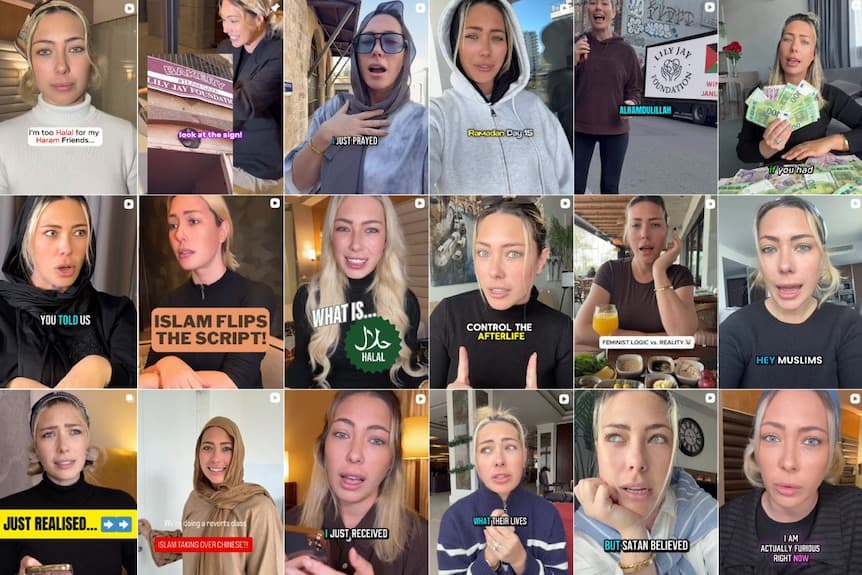
A social media influencer with nearly 3 million Instagram followers has been using AI-generated videos to promote charitable work that cannot be independently verified, according to an investigation by ABC NEWS Verify.
Lily Jay, who documents her conversion to Islam online, established the Lily Jay Foundation to support humanitarian initiatives in Uganda, Gaza, Nepal, and Sudan. But the investigation found multiple instances where artificial intelligence was used to fabricate footage presented as real charitable work.
In one February video announcing an orphanage opening in Uganda, the blonde woman appearing on screen is not the real Lily Jay but an AI fabrication. The children holding lollipops behind her and the foundation's banner are also AI-generated. Other shots in the same video mix fabricated content with what appears to be genuine footage, making it difficult to distinguish fact from fiction.
Unregistered Operations and Missing Evidence
The Ugandan Registration Services Bureau initially confirmed no orphanage was registered under the Lily Jay Foundation or "Ada Nur," the name given to the facility on the foundation's website. Operating an unregistered orphanage is illegal in Uganda. Days after ABC NEWS Verify sent questions to the foundation, a registration appeared for "Lilly Foundation Limited" with a status listed as "not compliant."
The investigation found no independent corroboration of the orphanage's existence and no aid operators or government officials in Uganda familiar with the foundation's work.
Similar questions surround the foundation's claimed operations in Gaza, where it says it opened a bakery to deliver humanitarian aid. ABC NEWS Verify could not geolocate the bakery or find supporting evidence it exists. Humanitarian sources working in Gaza said they had not heard of the Lily Jay Foundation or its bakery.
Fabricated Awards and Commercial Structure
In May, a press release announced Lily Jay had won the "2026 Austral-Global Excellence Award for Humanitarian Leadership." Analysis confirmed both images of her receiving the award carried ChatGPT's SynthID watermark, indicating they were AI-generated. The press release came from Real Media Group, which lists Lily Jay as both a client and co-founder on its website. No mention of the Austral-Global award exists outside materials connected to the foundation or Real Media Group.
Despite soliciting donations, the foundation's website states it "is not an actual charity" but rather "a next-generation social enterprise and high-speed humanitarian logistics firm." The foundation registered its first Australian Business Number in 2025 but is not registered with the Australian Charities and Not-for-profits Commission, meaning donations are not tax-deductible and the organization faces no requirement to publicly disclose how funds are spent.
Why it matters
The case illustrates how generative AI tools can be weaponized to manufacture credibility for unverified charitable operations at scale. With AI-generated content becoming harder to detect, social media users face growing difficulty distinguishing legitimate humanitarian work from fabricated claims designed to exploit goodwill. Former World Vision Australia CEO Tim Costello noted that misuse of public trust damages the reputation of legitimate NGOs: "When people voluntarily give, they're showing love. So, you never want to abuse that, ever."
After ABC NEWS Verify sent questions, Australian visitors to the foundation's website were redirected to a version with donation options removed, though the international site with donation capabilities remains accessible to overseas users. Many questioned pages, including those about the Ugandan orphanage and the fabricated award, have been stripped from the website.
Lily Jay, whose real name is Lily Jay Hinson, did not respond to detailed questions. Corporate records list Syed Ahmed Mohsin, Christine Hinson, and James Bracher as directors, though Lily Jay herself does not appear in the foundation's official documents.
These details were first reported by ABC NEWS Verify.
This is an original analysis by the Omega editorial team. Source reporting: AI Watch.
Want systems like this working for your business?
Book a Call