AI Gatekeepers and Workslop: New Friction in the Workplace
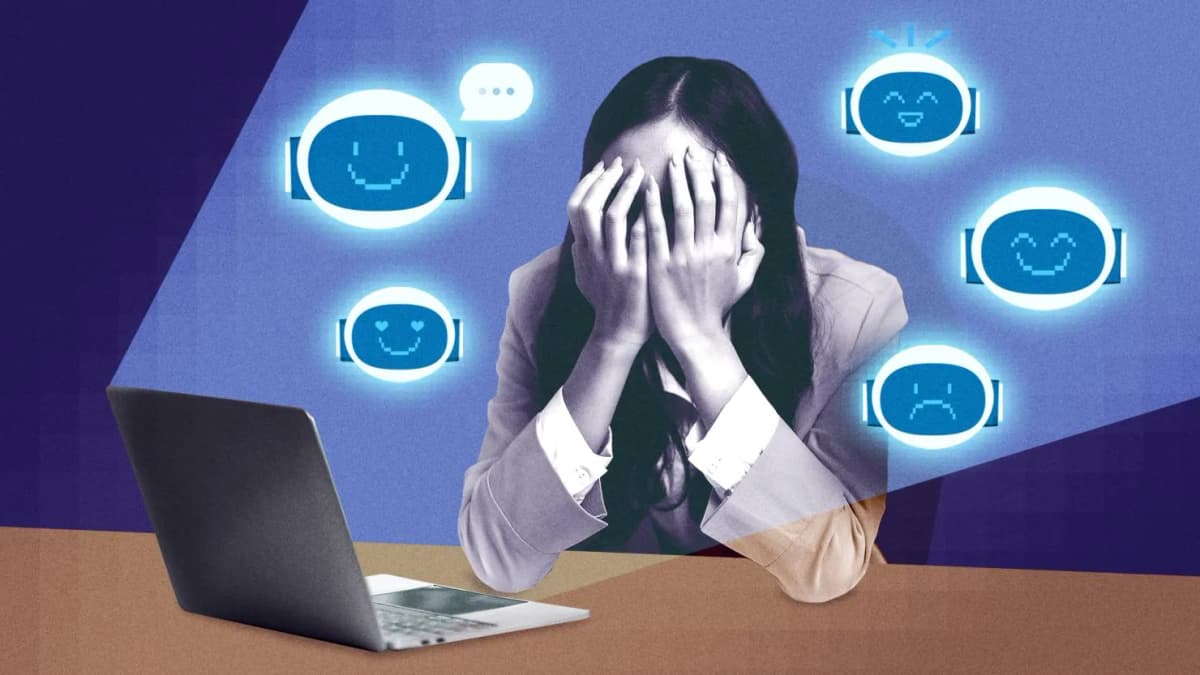
Workers report mounting frustration as colleagues deploy AI agents to filter communications, generate low-quality content, and deflect basic questions.
The new workplace dysfunction
A Chicago project director recently found herself unable to reach a contracted AI expert whose automated agents began filtering out her team's emails and texts. The communication breakdown has delayed client deliverables and left the team unable to pay the contractor for completed work. The director has resorted to tracking down the expert's speaking engagements to make contact in person.
The incident illustrates a broader pattern of AI-induced workplace friction that's emerging as employees experiment with generative AI tools without clear organizational guidance. According to a CNBC and SurveyMonkey survey of 1,686 workers released Thursday, roughly half of employees now use AI at least weekly, yet 84% are self-taught and 55% work at companies without formal AI policies.
Why it matters
The current wave of workplace AI adoption is happening without the training infrastructure or cultural norms that typically accompany new technology rollouts. This gap is creating measurable productivity losses and relationship strain that could undermine AI's promised efficiency gains—particularly as businesses pour billions into generative AI with limited returns so far.
The workslop problem
Employees report spending additional hours fixing what researchers call "workslop"—AI-generated content that appears polished but lacks substance. A September 2025 study by BetterUp and Stanford Social Media Lab found that 40% of desk workers have received such content, creating a potential multi-million dollar productivity hit.
Kim Bode, CEO of Michigan-based communications firm 8thirtyfour, says she lost $10,000 on a contractor whose campaign content appeared entirely AI-generated and required complete rewriting. "The quality of work has significantly decreased," Bode said, adding that the issue is "very much straining relationships."
A marketer in the Midwest described the dilemma of receiving subpar AI content from colleagues: "It's hard to tell whether or not they think it's actually good and satisfactory, or if they're like, 'I know it's not good, but I'm going to send it over anyways.' Both are problematic in their own ways."
Deflection and disconnection
Roughly one in four AI-using workers have redirected colleagues to ask AI tools before coming to them with questions, according to the CNBC survey. While users cite encouraging self-sufficiency and saving time, management consultant Alison Green says the practice "feels really lazy and sloppy to people" and misses the point of seeking human expertise.
The impact is particularly acute when managers use AI to substitute for developmental conversations. Research from BetterUp Labs, Stanford, and Oxford's Saïd Business School found that when leaders deploy AI for mentorship or career advice, workers' desire to quit increases 29%, burnout rises 26%, and team coordination drops 12%.
Suspicion and insecurity
AI use is also breeding mutual suspicion. A 30-year-old London HR worker, Joanna Briggs, bristled when a colleague complimented her email then immediately asked if she'd used ChatGPT. An Atlassian experiment involving 1,000 workers found that people who said they used AI were perceived as lazier and less likely to be assigned major projects.
Underlying the tension is job insecurity: roughly one in five workers say AI makes their job feel less secure, and one in three are more pessimistic about the job market because of it, per the CNBC survey.
A 26-year-old Chicago copywriter said her role has devolved into editing colleagues' AI writing, with peers now more likely to push back on her revisions. "Is that what you believe, or is that what Claude told you?" she finds herself asking.
Implementation stumbles
Even well-intentioned AI adoption can backfire. Aura Telman, chief people officer at a Washington, D.C. architecture firm, said employees' use of Microsoft Copilot led to AI notetakers being automatically added to meetings and transcripts sent to all participants—including sensitive discussions that lacked proper context. The firm now requires explicit consent before AI notetakers join meetings.
Green notes that AI isn't creating entirely new workplace problems but rather adding complexity to existing challenges around power dynamics, judgment, and diplomacy. "Work is already so complicated," she said, "and now we're throwing this additional thing in the mix that people have to grapple with."
These details were first reported by CNBC Make It.
This is an original analysis by the Omega editorial team. Source reporting: AI Watch.
Want systems like this working for your business?
Book a Call