AI Deciphers 2,000-Year-Old Carbonized Scrolls From Vesuvius
Machine learning and X-ray tomography reveal Greek philosophical texts sealed by Mount Vesuvius in 79 AD, opening a window into Julius Caesar's era.
AI Deciphers 2,000-Year-Old Carbonized Scrolls From Vesuvius
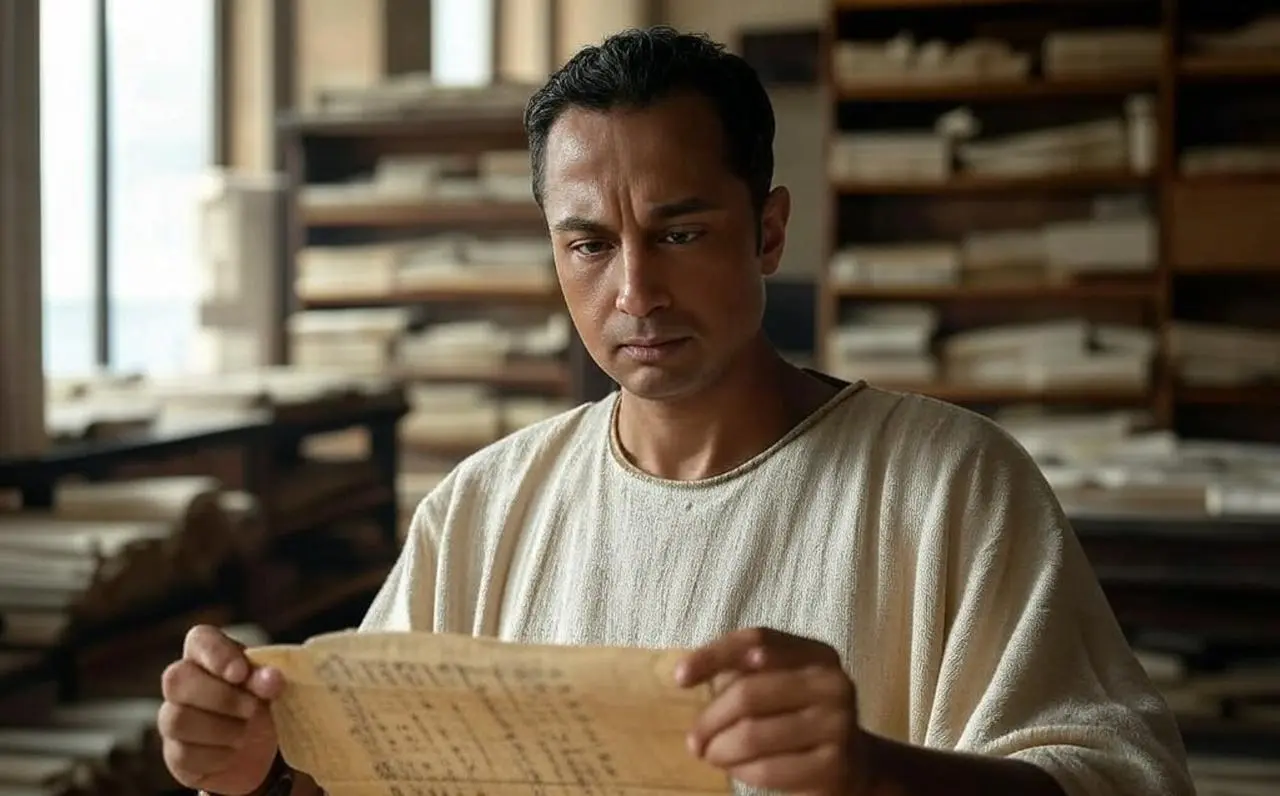
Researchers have successfully decoded text from carbonized papyrus scrolls buried by Mount Vesuvius in 79 AD, using a combination of advanced X-ray imaging and machine learning algorithms. The breakthrough reveals Greek philosophical writings that have remained unreadable for nearly two thousand years.
The scrolls come from the personal library of Lucius Calpurnius Piso Caesoninus, Julius Caesar's father-in-law, in the ancient city of Herculaneum. When Vesuvius erupted, mudflows with temperatures between 300 and 330 degrees Celsius entombed the collection. While the extreme heat carbonized the papyri, the same mud that destroyed them also created an oxygen-free seal that prevented complete disintegration.
Why it matters
This represents the only intact ancient library ever discovered, containing works that would otherwise be lost to history. The successful decipherment opens access to original Greek philosophical texts, including previously unknown writings about Plato and fragments from Stoic philosophy. For technology leaders, the project demonstrates how AI can solve problems that seemed physically impossible—reading text when the ink and writing surface have nearly identical compositions after carbonization.
How the technology works
The decipherment relies on phase-contrast X-ray tomography, which exploits subtle differences in how X-rays travel through ink versus carbonized papyrus. According to research published in Nature Communications, the ink—made from carbon-rich soot—sits slightly raised above the papyrus surface by a few hundred microns. This elevation creates detectable variations in X-ray refraction, even though the materials have nearly identical densities.
Scans performed at the Diamond Light Source facility in Harwell, UK in July 2024 captured detailed images of scroll PHerc. 172, one of three Herculaneum papyri held at Oxford's Bodleian Library. The scroll contains multiple columns of Greek text, with approximately 26 lines per column.
Machine learning algorithms then analyze the X-ray data to identify where ink is present. Critically, these models detect ink without understanding language or recognizing individual characters—human scholars must still transcribe and translate the revealed text.
The Vesuvius Challenge
The work proceeds under the Vesuvius Challenge, a global competition offering $1.5 million in prizes for developing new approaches to unroll and read the ancient scrolls. By February 2025, researchers had decoded passages from Philodemus of Gadara, a Syrian-born Epicurean philosopher who studied in Athens before the Common Era.
One early success identified the Greek word "διατροπή" (diatropé), meaning "disgust." The Oxford scroll has proven particularly valuable because its ink appears to contain a denser contaminant, possibly lead, making it more visible in X-ray scans than other Herculaneum materials.
Richard Ovenden, Bodley's Librarian, noted that the project demonstrates how libraries, humanities scholars, and computer scientists can collaborate to reveal previously invisible historical records.
The scrolls, first unearthed in 1752, range from three to fifteen meters in length. Early attempts to unroll them often caused deterioration or destruction. The current effort, which began in earnest around 2015, represents the first time researchers have successfully read substantial portions of text without physically opening the fragile documents.
These details were first reported by Futura Sciences.
This is an original analysis by the Omega editorial team. Source reporting: AI Watch.
Want systems like this working for your business?
Book a Call