AI Data Centers Are Breaking the Grid's Architecture
Gigawatt-scale compute loads expose decades-old power infrastructure flaws that generation alone can't fix.
The problem isn't generation
When a transmission fault struck Ashburn, Virginia in July 2026, more than 3 gigawatts of data center load dropped off the grid instantly. A similar incident two years earlier had taken down roughly 60 facilities and 1,500 megawatts. The culprit wasn't a shortage of power—it was an architecture mismatch between how AI data centers behave and what the grid was built to handle.
While most energy debates focus on adding more generation capacity, these Virginia outages revealed a different bottleneck: the standard data center power stack can't manage the volatile, gigawatt-scale loads that AI training creates. And with more massive compute campuses in the pipeline, the problem is about to get worse.
Why it matters
AI infrastructure is being built at unprecedented scale, but the power systems connecting it to the grid haven't evolved past designs meant for predictable industrial loads. Without architectural changes, each new gigawatt-scale campus increases grid instability risk—and regulators are starting to notice. The solution exists, but it requires rethinking where and how power conditioning happens.
Where legacy systems fail
Traditional data centers route medium-voltage power through transformers, then condition it with low-voltage uninterruptible power supply (UPS) units near the server racks. This design worked for decades of steady loads, but it breaks under AI's demands in three critical ways.
First, UPS batteries were sized for brief outages, not continuous absorption of massive load swings. When an AI training run ramps up or down by 70% in milliseconds, those batteries can't buffer the impact.
Second, most UPS systems run in bypass mode to avoid conversion losses, meaning compute load swings hit the grid directly while grid disturbances reach equipment unfiltered. Static switches can't react fast enough to catch sub-millisecond transients.
Third, protection logic written when 50 megawatts qualified as "large load" now governs facilities ten times that size. During the 2024 Virginia event, facilities disconnected automatically after counting three voltage dips—exactly as designed, but at the worst possible moment for grid stability.
The architectural fix
ON.energy, which reported these findings in MIT Technology Review, proposes three concurrent changes: move power conditioning to medium voltage (13.8 kilovolts or higher), relocate it from inside buildings to modular substations, and make it inline so every electron flows through conditioning equipment rather than bypassing it.
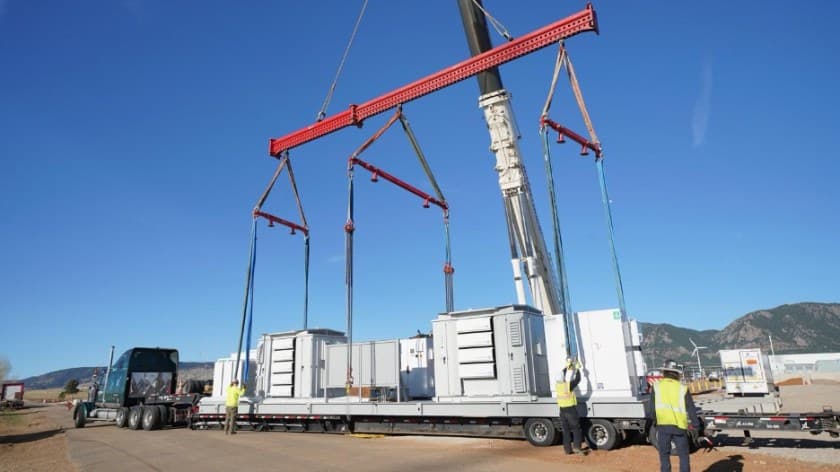
In early 2026, the company tested a full-scale system at the National Laboratory of the Rockies, the only Western Hemisphere facility that can simulate both AI load profiles and grid faults simultaneously. The system absorbed complete voltage drops on the grid side while compute continued uninterrupted, meeting ERCOT's large-load requirements without modification.
The architecture changes more than reliability. Medium-voltage systems sitting outside the building envelope can qualify for tax credits and generate revenue through demand response programs. Interconnection approval simplifies to certifying one medium-voltage box instead of auditing every downstream component. Former UPS rooms convert to compute or cooling space, increasing density per construction dollar.
Building the next wave
Grid operators increasingly require voltage ride-through certification before connecting gigawatt-scale loads. What the industry has treated as compliance hurdles become baseline capabilities when power conditioning moves to medium voltage and inline operation.
The next generation of AI campuses will either strain the grid or stabilize it. The engineering to build the second kind already exists—it just requires accepting that the problem isn't about generating more electrons, but about managing the ones already flowing. The details were first reported by ON.energy in MIT Technology Review.
This is an original analysis by the Omega editorial team. Source reporting: AI Watch.
Want systems like this working for your business?
Book a Call