AI Data Center Push Puts Republican Senate Seats at Risk
Trump's vocal support for rapid AI infrastructure expansion clashes with local opposition, forcing GOP candidates to distance themselves in key swing states.
President Donald Trump's aggressive push to accelerate artificial intelligence data center construction across the United States is creating unexpected political turbulence for Republican Senate candidates in competitive races, according to a Bloomberg report.
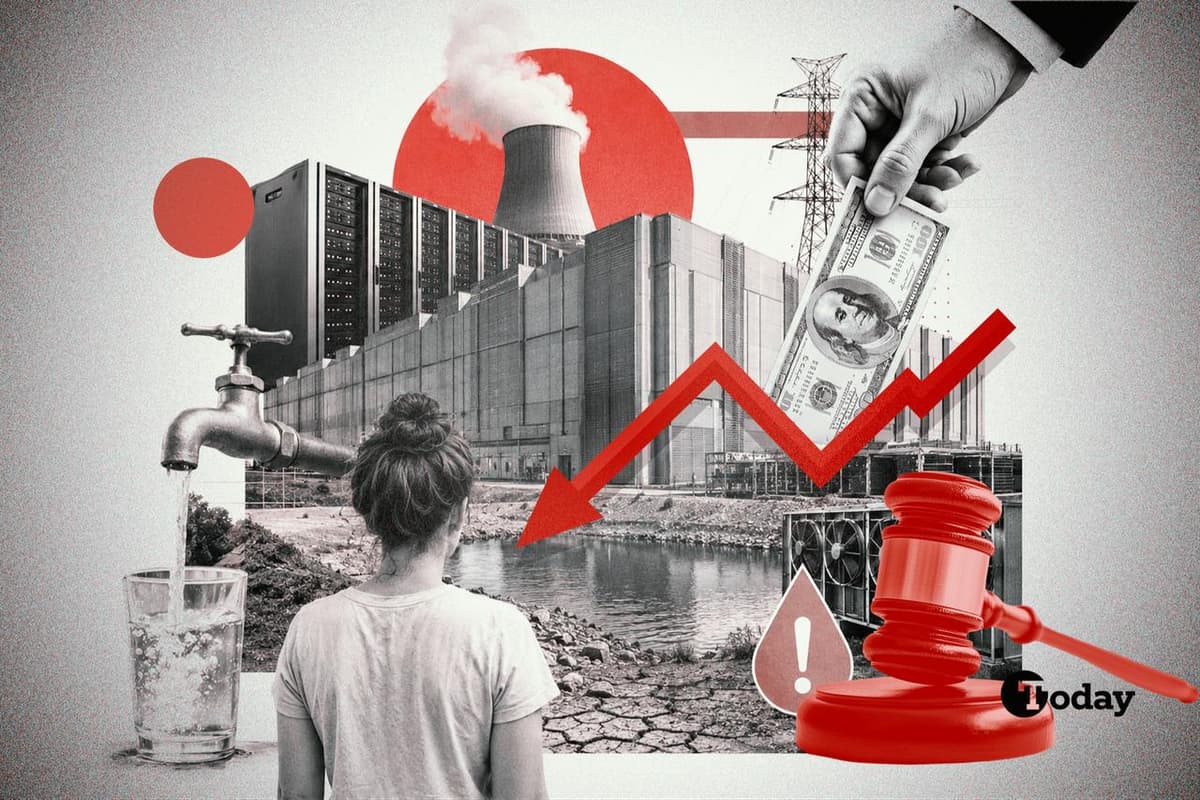
Recent polling shows approximately 70 percent of Americans oppose having data centers built near their communities, creating a vulnerability that Democratic candidates have begun exploiting in several key Senate contests. The issue has become particularly acute in swing states that Trump won in 2024 but where Senate control remains contested.
Republican candidates break with Trump
In Ohio, Republican Senator Jon Husted faces television ads from Democrat Sherrod Brown branding him as the "face of data centers" due to his previous support for tax incentives for the facilities. The attack has proven effective enough that some Republican strategists have privately warned administration officials they risk losing the public opinion battle over AI infrastructure.
The political pressure has forced prominent Republicans to diverge from the president's position. Texas Governor Greg Abbott imposed a temporary moratorium on new data centers, while Attorney General Ken Paxton, running for Senate, proposed his own regulatory framework. In Michigan, Republican Senate candidate Mike Rogers called for a one-year moratorium after facing criticism from Democrat Abdul El-Sayed.
Trump doubles down despite warnings
Despite counsel from political strategists to emphasize AI's economic benefits and job security, Trump has intensified his rhetoric. Speaking from the Oval Office, he framed data centers as essential for economic prosperity and national competitiveness against China, telling reporters that communities opposing the facilities are choosing to be "backward and poor."
On social media this week, the president urged the public to "let data reign" and characterized local resistance as economically self-defeating. By Friday, he reframed the issue as a choice for local communities, though without softening his fundamental position.
Why it matters
The data center controversy illustrates how rapid AI infrastructure deployment intersects with local quality-of-life concerns and electoral politics. With Senate control potentially hinging on outcomes in Ohio, Michigan, and Texas—all states Trump carried—the issue could determine whether Democrats gain congressional majorities that would constrain the president's legislative agenda and enable new oversight investigations. The Republican candidates' need to distance themselves from Trump's position reveals the political cost of infrastructure decisions that affect residential communities, even when tied to strategic technology priorities.
Democrats seize the opening
Democratic candidates have successfully linked AI infrastructure expansion to cost-of-living concerns, a connection that resonates with voters already anxious about economic pressures. The strategy has proven effective enough to force Republican repositioning in multiple states simultaneously.
The political dynamics come as the administration continues to promote major AI infrastructure initiatives, including the Stargate project announced by OpenAI, Oracle, and SoftBank, which envisions more than $400 billion in investments over three years.
These details were first reported by Bloomberg, based on conversations with sources granted anonymity to discuss private political strategy discussions.
This is an original analysis by the Omega editorial team. Source reporting: AI Watch.
Want systems like this working for your business?
Book a Call