AI Cuts 3D Printing Tests from 100 Million to 40 for NASA Alloy
Washington State University researchers used machine learning to identify viable printing parameters for GRCop-42, a heat-resistant copper alloy previously printable only on specialized equipment.
AI Slashes Experimental Burden for Advanced Manufacturing
Researchers at Washington State University have demonstrated how artificial intelligence can compress years of trial-and-error manufacturing research into months, successfully identifying viable 3D printing parameters for a challenging aerospace alloy while testing just 40 configurations out of more than 100 million possibilities.
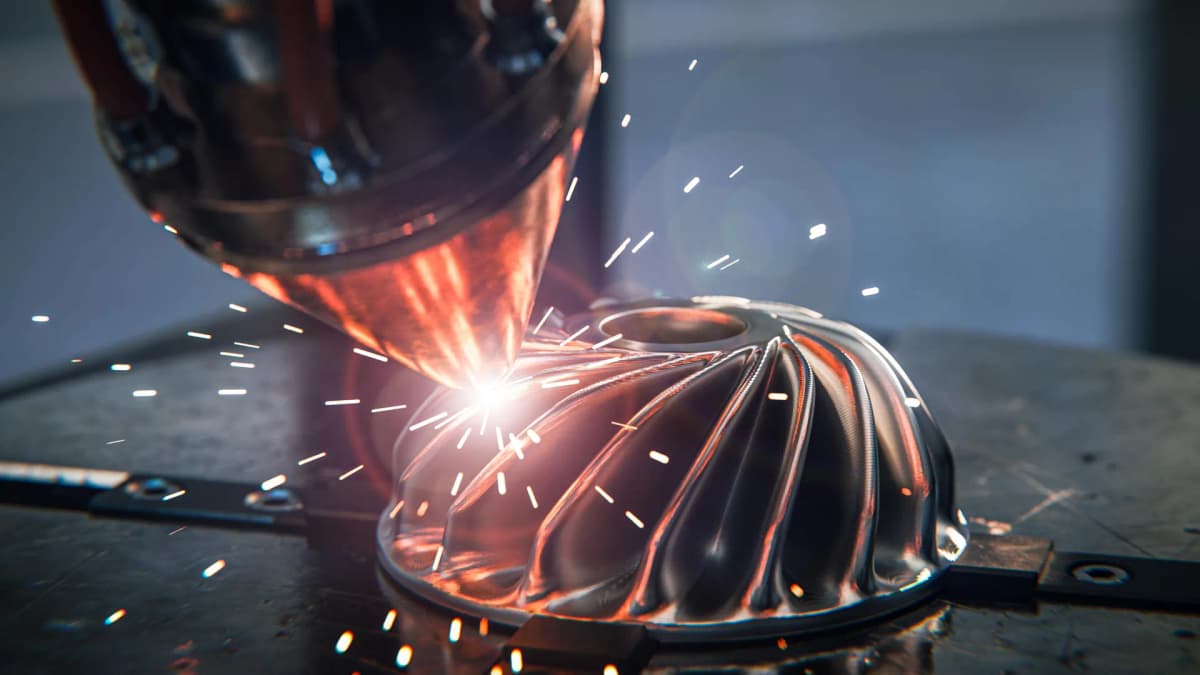
The breakthrough centers on GRCop-42, a copper-chromium-niobium alloy developed by NASA for extreme-heat applications including liquid rocket engine combustion chambers. The material combines high thermal conductivity with strength retention at elevated temperatures, but its printing requirements have kept it accessible only to facilities with specialized high-power laser systems.
A team from WSU's schools of Electrical Engineering and Computer Science and Mechanical and Materials Engineering published their approach in the Proceedings of the AAAI Conference on Artificial Intelligence, where the work received the Innovative Deployed Application Award.
Why it matters
Ninety percent of commercial 3D printers lack the laser power traditionally needed to print GRCop-42. By identifying successful configurations at lower power levels—including a first-time success at 500 watts—the research could democratize access to this high-performance material for universities, smaller labs, and companies without specialized equipment. The method also offers a template for accelerating discovery in any field where experiments are expensive and successful outcomes rare, from materials science to drug development.
Training AI on Failure Data
The research team began with data from 37 failed printing attempts conducted in earlier experiments. Using those results, they developed a model to estimate the likelihood that untested parameter combinations would succeed.
The AI system recommended small batches of new configurations to test, balancing two strategies: pursuing settings that appeared most promising based on existing data, and exploring uncertain regions of the parameter space to gather information that would improve the model itself.
"They would give me back the results, and I liked all of them—even if they failed—because every result improved our AI model," said Azza Fadhel, first author and PhD student in computer science.
Physical printing and evaluation were conducted by Nathaniel Zuckschwerdt, Susmita Bose, and Amit Bandyopadhyay in WSU's School of Mechanical and Materials Engineering, with additional collaboration from Aryan Deshwal at the University of Minnesota.
Finding Needles in a 100-Million-Option Haystack
The challenge was formidable: each printing attempt costs hundreds of dollars in materials and equipment time, and analyzing finished samples can require several days. Some configurations simply melted the material, making it clear that exhaustive testing was impossible.
"It's a very challenging case for AI," said Jana Doppa, Huie-Rogers Endowed Chair Professor of Computer Science who led the research. "Every time you try, you basically get a binary success or failure signal, and you are trying to minimize the number of tries that you have so that you get to those successful needles very quickly."
Over three months, the team identified six successful configurations at different laser power levels while limiting total experiments to 40.
Applications Beyond Manufacturing
The researchers emphasize their approach could extend to other metal alloys and additive manufacturing systems. More broadly, the method applies to any scientific problem where successful results are uncommon, experimental costs are high, and the parameter space is vast—characteristics shared by fields including drug discovery and materials development.
These findings were first reported by Washington State University and presented at the AAAI Conference on Artificial Intelligence.
This is an original analysis by the Omega editorial team. Source reporting: AI Watch.
Want systems like this working for your business?
Book a Call