AI Could Shrink Chip Design Teams From 150 to 10, Says Ex-Google AI Chief
Jeff Dean argues reinforcement learning and automation can compress design cycles from years to months, enabling rapid custom silicon development.
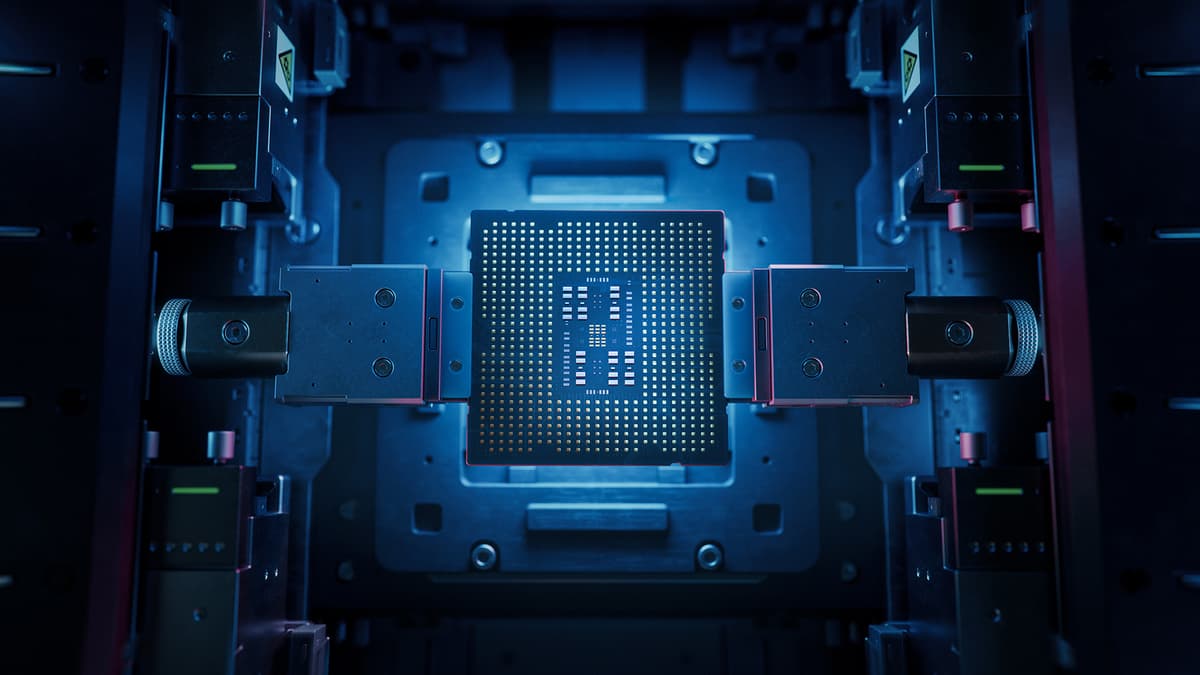
AI-Driven Automation Promises Radical Efficiency in Chip Design
Jeff Dean, Google's former AI chief and current head of AI firm Discovery Loop, believes artificial intelligence can fundamentally transform semiconductor development by dramatically reducing both team sizes and design timelines. Speaking at a recent fireside chat, Dean projected that AI automation could enable a team of just ten engineers to design a chip in three months—a process that traditionally requires 150 people and two years.
Dean, one of Google's earliest employees, has long investigated reinforcement learning applications in chip design. He co-authored a controversial 2021 Nature paper claiming AI-based methods outperformed traditional chip design approaches, though the research later faced legal scrutiny. Despite that controversy, Dean remains convinced that AI represents the future of semiconductor development.
The Case for Specialized Hardware
Dean's vision centers on the growing need for custom silicon tailored to specific workloads. He argues that modern computing is increasingly dominated by a handful of intensive tasks—particularly AI inference and training—that benefit from hardware specialization rather than general-purpose processors.
The challenge with custom chips, however, is their inflexibility. "The problem with specialization is if what you want to do changes in the future, then the thing you've lovingly crafted for hardware for, maybe two years, is no longer perhaps as relevant," Dean explained. This creates a fundamental tension: specialized hardware offers superior efficiency, but long design cycles force companies to bet on computing needs years in advance.
Automation as the Solution
Dean's proposed solution leverages AI to automate the translation from high-level chip specifications to low-level register-transfer-level (RTL) designs—a process that currently requires multiple teams of engineers working sequentially. One team creates the RTL specifications while another verifies their work, consuming significant time and resources.
By running "automated loops that are searchable by reinforcement learning or other evolutionary techniques," Dean believes designers can compress the exploration and verification phases dramatically. Speed is critical: faster iteration enables more design experimentation and reduces the risk inherent in long development cycles.
If successful, this approach would transform the economics of custom silicon. Companies could design specialized chips for near-term needs rather than distant projections, responding more nimbly to evolving workloads and competitive pressures.
Why it matters
The semiconductor industry faces mounting pressure to deliver specialized chips for AI and other demanding workloads, but traditional design processes create multi-year delays and require massive engineering investments. If AI automation delivers even a fraction of Dean's projected efficiency gains, it could democratize custom silicon development, enabling smaller companies to compete with established players and accelerating hardware innovation cycles across the industry. The implications extend beyond chip design itself—faster, cheaper custom silicon could reshape cloud computing economics and accelerate AI deployment.
Industry Skepticism Remains
Dean's optimism isn't universally shared. While major EDA providers and some Chinese firms are exploring agentic AI for chip design, TSMC has expressed skepticism about AI's suitability for next-generation manufacturing technologies. The debate reflects broader uncertainty about how AI agents will perform in complex engineering domains where errors carry enormous costs.
These details were first reported by Wccftech.
This is an original analysis by the Omega editorial team. Source reporting: Automation Watch.
Want systems like this working for your business?
Book a Call