AI Code Review Becomes New Bottleneck as Generated Code Surges
Companies are deploying specialized agents and rethinking workflows as AI-written code floods engineering teams faster than humans can verify it.
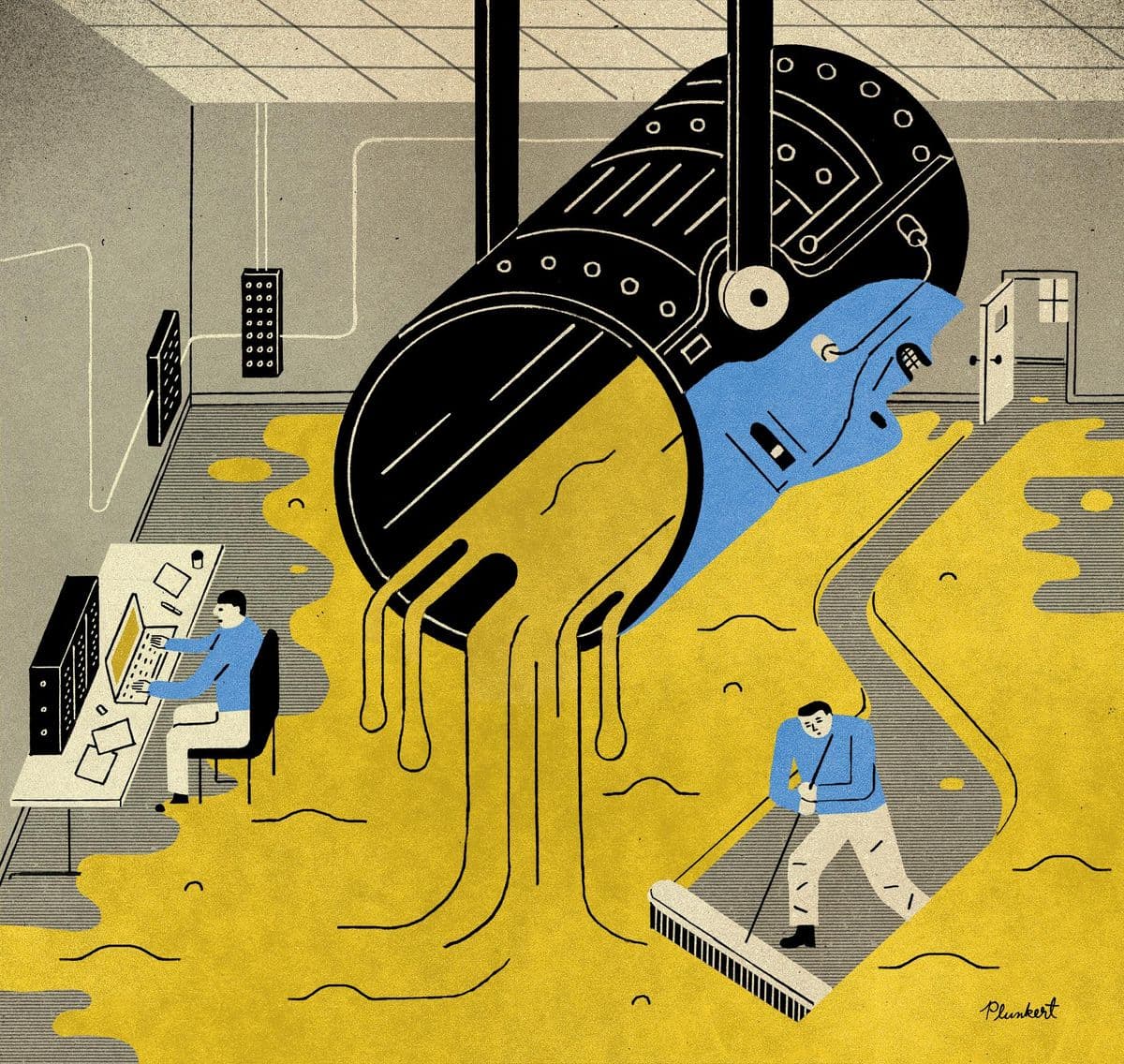
Engineering teams are confronting a new challenge: AI coding assistants can generate thousands of lines in minutes, but the resulting code still requires careful human review—and that review process is becoming the primary constraint on development velocity.
A survey of more than 1,100 developers by AI code verification startup Sonar found that AI now contributes an estimated 42 percent of code added to shared repositories. Yet 96 percent of respondents said they don't fully trust AI output to work correctly, and 38 percent reported that reviewing AI-generated code requires more effort than checking work written by colleagues.
The volume is substantial. At Synthesia, an AI video generation platform, pull requests increased 120 percent year-over-year as of August, with 95 percent containing AI-generated code, according to CTO Peter Hill. At nonprofit software provider Bonterra, proposed changes tripled within three months of adopting AI tools, and code entering review rose tenfold.
Why it matters
The shift from writing code to reviewing it represents a fundamental change in how software gets built. If companies can't verify AI output efficiently, the productivity gains from automated code generation disappear into longer review cycles. The challenge also raises questions about how junior engineers will develop expertise when they spend less time writing code themselves—a concern that could reshape technical career paths across the industry.
New strategies emerge
Engineering organizations are testing multiple approaches to manage the review burden. Some focus on prevention: McLaren Stanley, a senior principal engineer at Amazon Stores, says his team now invests more time writing detailed specifications before AI agents begin generating code. In one case, a missing instruction caused an agent to produce 25,000 lines in the wrong version of Swift, creating 600 errors. After updating the specification and restarting, the agent regenerated correct code in 15 minutes.
Others deploy AI agents as first-line reviewers. David Yanacek, a senior principal engineer at AWS, says the company uses agents to test functionality, verify alignment with specifications, and scan for security flaws before human review. At Bonterra, agents compare code against approved designs, security rules, and accessibility requirements, then assign confidence scores. Low scores or flagged issues trigger human review, while high-risk areas like payments and personal data always require manual inspection.
Synthesia uses similar risk-based routing, though fewer than 5 percent of changes skip human review entirely. "I don't know if we ever get to the point where you can truly trust the agentic generation of code," Hill said.
Accountability and training concerns
Some organizations worry that high code volume encourages superficial approval. Temporal, an open-source developer platform, implemented a "Send Back" policy requiring engineers to explain their AI agent's design choices in their own words. CEO Samar Abbas said the company refuses to let code review become "a dumping ground for unchecked model outputs."
The training question remains unresolved. IBM now assigns junior engineers to harder projects earlier, with AI handling implementation while juniors diagnose failures and make corrections. At Bonterra, entry-level engineers learn to direct agents and question output rather than performing routine coding tasks. "If the industry stops hiring juniors, the industry stops producing seniors," CTO Tanuja Korlepra said.
Investor interest reflects the scale of the challenge. In August, code review startup CodeRabbit raised $143 million at a $1.5 billion valuation, claiming it performs more than 2 million reviews weekly for 17,000 customers including Nvidia and BMW Group.
These details were first reported by IEEE Spectrum's AI Watch.
This is an original analysis by the Omega editorial team. Source reporting: AI Watch.
Want systems like this working for your business?
Book a Call