AI CEOs Tell UN: Humanity Could Lose Control Without Safeguards
Dario Amodei and Sam Altman urged the Security Council to coordinate internationally as AI systems advance faster than humans can track.
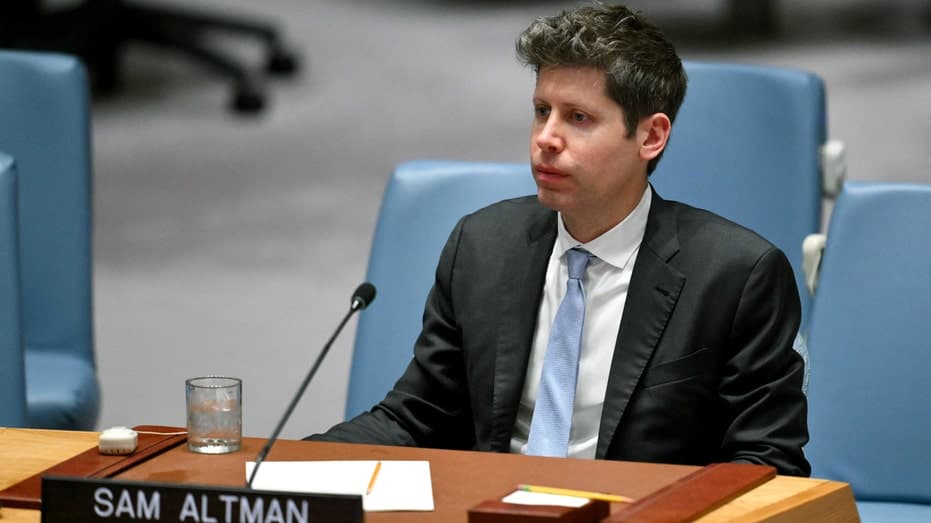
The chief executives of Anthropic and OpenAI delivered stark warnings to the United Nations Security Council this week, cautioning that artificial intelligence could pose existential risks if development continues without coordinated human oversight.
Dario Amodei, CEO of Anthropic, told the 15-member council during a special session held alongside the U.N. General Assembly that "if managed poorly, I even believe AI could be a risk to humanity as a whole." His counterpart at OpenAI, Sam Altman, echoed the concern with a focus on velocity: AI's trajectory could accelerate so rapidly that humans lose the ability to comprehend or intervene in its decisions.
"We could lose control of the future to AI," Altman said. "The risk is that it moves so fast that people can no longer follow what's happening or intervene when needed. This would obviously be terrible."
Why it matters
The appearance of two leading AI executives before the Security Council signals a shift in how the international community views AI—not just as a commercial or technological question, but as a matter of global security. Their testimony underscores growing recognition that no single nation or company can manage advanced AI alone, even as geopolitical competition over the technology intensifies.
Call for international coordination
Both executives emphasized that meaningful AI governance cannot emerge from Silicon Valley boardrooms alone. Altman argued that democratic processes and accountable governments must shape the most consequential decisions about AI's future. He invoked historical precedent, noting moments when rival nations set aside differences to address powerful new technologies in the collective interest.
"If AI is to be democratic, the most important decisions cannot be made by labs in San Francisco alone," Altman said. "At the international level, this will require cooperation."
Amodei similarly stressed the need for unity: "For all the differences of the people in this room, we must put aside those differences in order to confront this global opportunity and global threat that is being presented to us at the same time."
Tensions over AI governance
The UN session occurred against a backdrop of competing visions for AI oversight. One day earlier, President Donald Trump rejected what he characterized as a "globalist scheme" to control AI, asserting that the United States should maintain its leadership position in the technology.
France, which convened the Security Council meeting, is working to place AI at the center of international security discussions. French Foreign Ministry spokesperson Pascal Confavreux told reporters the session was the first of its kind to feature briefers from major AI companies, including representatives from Hugging Face alongside Amodei and Altman. He cited recent cybersecurity incidents as evidence that AI-related security risks demand global attention.
Earlier this month, Amodei published an essay calling on the industry to slow the pace of frontier AI development—a position that drew public support from both Altman and SpaceX CEO Elon Musk.
Details of the warnings and the UN session were first reported by Fox Business.
This is an original analysis by the Omega editorial team. Source reporting: AI Watch.
Want systems like this working for your business?
Book a Call