AI CEOs Take Center Stage at G20 as Trade, Regulation Tensions Rise
Altman, Huang, and Musk addressed innovation ministers while U.S. officials clashed over trade deals and data center opposition.
AI CEOs Take Center Stage at G20 as Trade, Regulation Tensions Rise
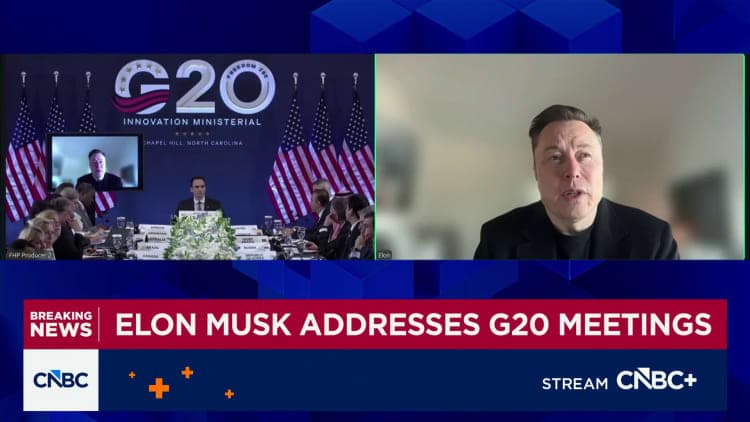
The world's leading artificial intelligence executives gathered this week in Chapel Hill, North Carolina, for the G20 Innovation Ministerial, where discussions of AI's economic promise collided with mounting tensions over trade policy and local resistance to data center construction.
OpenAI CEO Sam Altman, Nvidia CEO Jensen Huang, and Anthropic Co-Founder Tom Brown joined Wednesday's sessions, following appearances by Meta's Mark Zuckerberg and Tesla's Elon Musk on Tuesday. Commerce Secretary Howard Lutnick and White House Office of Science and Technology Policy Director Michael Kratsios led the gathering of representatives from G20 nations including China, Brazil, Canada, and Germany.
Why it matters
The convergence of AI industry leaders and government officials comes at a critical juncture when enthusiasm for artificial intelligence confronts practical obstacles—from international trade disputes to community pushback on infrastructure projects. How governments balance innovation incentives with local concerns will shape the pace and distribution of AI's economic benefits.
Musk Projects Major Economic Gains, Warns Against Overregulation
Speaking virtually on Tuesday, Musk predicted artificial intelligence will expand the global economy by 20% to 30% and forecast more than one billion humanoid robots operating worldwide within a decade. The Tesla and SpaceX chief urged governments to adopt a regulatory philosophy that makes activities "default legal, not default illegal."
Musk criticized what he characterized as excessive support for established corporations at the expense of emerging companies. "What most countries tend to do is they tend to provide too much support to the large existing trees in the forest, and not enough to the small saplings," he said, arguing the regulatory environment should favor newer entrants.
Treasury Secretary Criticizes AI Companies' Public Messaging
Treasury Secretary Scott Bessent delivered sharp criticism of how artificial intelligence companies have communicated with the public, calling their efforts "horrendous" during remarks Tuesday following separate G20 financial meetings in Asheville, North Carolina.
Bessent said the AI sector—including data center developers and research labs—needs "a big reset" in its approach to public trust. He emphasized companies must demonstrate that benefits will be distributed broadly rather than concentrated among a small group.
Data Center Disputes and Local Authority
Former White House AI czar David Sacks, now co-chair of the President's Council of Advisors on Science & Technology, addressed growing local opposition to data center projects. Sacks argued that properly executed developments can reduce electricity costs by generating net new power, with excess capacity flowing back to the grid.
His comments followed President Donald Trump's Monday post on Truth Social criticizing localities that resist data center construction. Despite the administration's strong support for AI infrastructure, Sacks maintained that "the federal government should not preempt the decision of states with respect to data centers," calling it "fundamentally a local decision."
Trade Tensions Surface Alongside Innovation Talks
The technology-focused agenda unfolded against a backdrop of deteriorating trade relations. Commerce Secretary Lutnick accused Canada of deliberately sabotaging negotiations to avoid Trump's proposed 50% tariffs on Canadian goods, claiming Canadian negotiators introduced "crazy ideas" on medium- and heavy-truck provisions hours before a deadline.
Lutnick told CNBC he asked a Canadian minister whether the country was intentionally undermining the talks, receiving the response: "I'm not allowed to say that." He characterized Canada's actions as politically motivated rather than substantive, though he acknowledged the U.S. may have also made late demands.
These details were first reported by CNBC.
This is an original analysis by the Omega editorial team. Source reporting: AI Watch.
Want systems like this working for your business?
Book a Call
