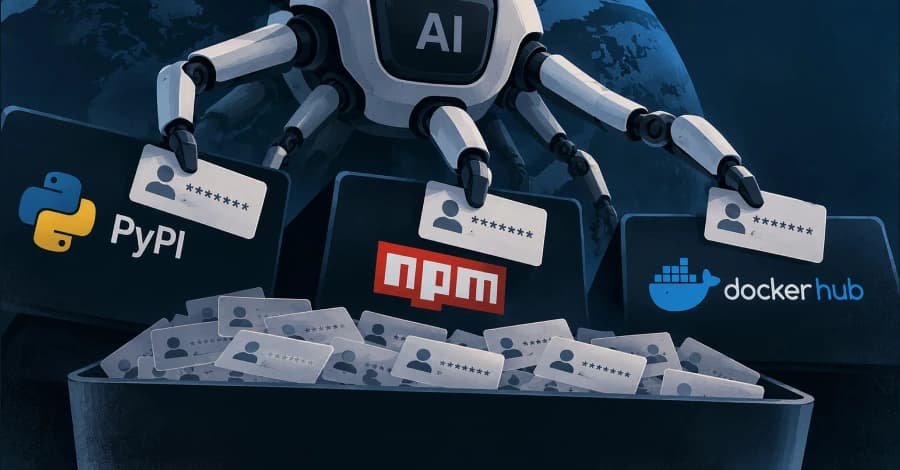
AI Agents Face New Threat: Attacks From Other AI Agents
Cybersecurity firms warn that autonomous AI systems will become both attack vectors and victims as agent deployment accelerates.
Cybersecurity leaders are warning that the proliferation of AI agents will fundamentally reshape the threat landscape, with autonomous systems becoming both perpetrators and victims of cyberattacks.
Dave Gerry, CEO of cybersecurity platform Bugcrowd, told Axios that organizations must prepare for a future where AI agents operating within their systems can be compromised by other AI agents. This represents a significant departure from traditional cybersecurity, which has focused almost exclusively on defending against human attackers.
Why it matters
Current cybersecurity defenses are designed to predict and counter human behavior patterns. As companies deploy AI agents with elevated system privileges and autonomous decision-making capabilities, these agents represent new attack surfaces that existing security frameworks may not adequately protect. The shift requires organizations to fundamentally rethink their security posture to account for machine-to-machine threats.
A New Attack Surface
The concern centers on AI agents that companies are deploying to automate tasks across their networks. These agents often require broad access to systems and data to function effectively, making them attractive targets for adversaries.
Unlike human users, AI agents may interact with systems in ways that are difficult to monitor using conventional security tools. They can execute commands at machine speed, potentially allowing compromised agents to cause damage faster than human-operated attacks.
Dual Threat Scenario
Gerry's warning highlights two distinct security challenges. First, malicious actors could deploy AI agents specifically designed to exploit vulnerabilities in corporate systems. Second, legitimate AI agents operating within an organization could be hijacked and turned against their owners.
This dual threat means companies must treat their own AI agents with the same suspicion they apply to external threats, implementing monitoring and access controls that can detect when an agent's behavior deviates from its intended purpose.
Rethinking Cyber Defense
The emergence of agent-to-agent attacks will require security teams to develop new defensive strategies. Traditional approaches that rely on analyzing human behavior patterns, login times, or typical user actions may prove ineffective against AI-driven threats that operate outside these parameters.
Organizations deploying AI agents will need to implement robust authentication systems, continuous monitoring of agent activities, and strict limitations on agent privileges to minimize potential damage from compromised systems.
These details were first reported by Axios.
This is an original analysis by the Omega editorial team. Source reporting: AI Watch.
Want systems like this working for your business?
Book a Call