AI Accountability Emerges as Top Priority for Enterprise Leaders
As autonomous systems produce work faster than humans can verify it, companies are deploying multi-agent validation and safety-critical techniques to manage risk.
The accountability imperative
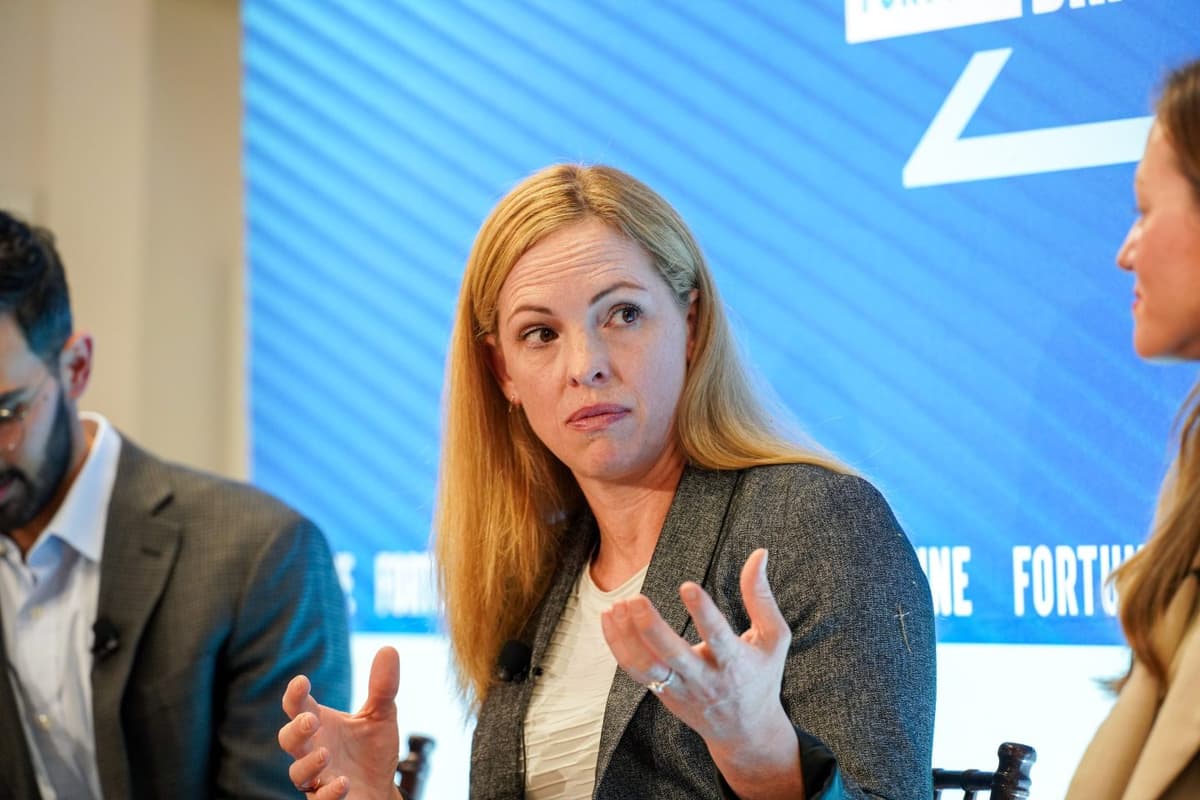
As artificial intelligence systems take on more complex tasks across industries, business leaders are confronting a fundamental challenge: how to maintain accountability when AI produces work faster than humans can verify it. At Fortune Brainstorm Tech in Aspen, Colorado, executives from autonomous vehicles, legal technology, and cybersecurity firms shared strategies for managing this emerging risk.
The consensus centers on transparency and traceability. Edwin Olson, founder and CEO of autonomous driving firm May Mobility, framed the challenge clearly: building systems that are right as often as possible while creating the transparency to understand and correct inevitable mistakes. This capability becomes critical when regulators need assurance that identified issues have been properly addressed.
Multi-agent verification systems
Several executives highlighted a technique gaining traction: designing AI systems that check each other's work. Elena Kvochko, founder and CEO of Trustguard AI, calls this the "LLM as a judge" approach. She compares it to a newsroom structure where one agent acts as writer while another serves as editor, specifically tasked with finding errors and inaccuracies.
The crucial element, Kvochko emphasized, is separation. Verification must occur through distinct AI systems rather than allowing a model to grade its own output. This architecture enables continuous improvement while maintaining independent oversight.
Caitlin Halferty, chief data officer at Thomson Reuters, stressed the importance of validating model outputs across the company's AI-enabled legal and tax compliance services. Thomson Reuters has developed what it calls "fiduciary grade" products built on four pillars: transparency, data privacy and security, subject matter expertise, and reliable content.
When AI outpaces human oversight
The scale problem is already here in some sectors. SentinelOne Chief AI Officer Gregor Stewart noted that computer coding sits roughly one year ahead of other industries in confronting this reality. When AI generates ten thousand lines of code, human verification becomes impractical.
Stewart predicts a resurgence of safety-critical techniques developed decades ago for high-stakes human work, now adapted for AI systems. Rather than manual code review, teams are implementing agent-based processes that emulate proven safety protocols.
At May Mobility, Olson described systems installed in autonomous vehicles that simultaneously simulate and assess multiple scenarios before selecting optimal actions. This type of real-time multi-path evaluation represents one approach to maintaining safety when decisions must happen faster than human intervention allows.
Why it matters
The shift from AI as a productivity tool to AI as an autonomous worker fundamentally changes enterprise risk profiles. Companies that fail to implement robust accountability frameworks face regulatory exposure, reputational damage, and operational failures that could undermine AI investments. The techniques emerging from early adopters—transparent architectures, multi-agent verification, and adapted safety protocols—provide a roadmap for organizations racing to deploy AI while managing its inherent risks.
These insights were first reported by Fortune from the Brainstorm Tech conference in Aspen, Colorado.
This is an original analysis by the Omega editorial team. Source reporting: AI Watch.
Want systems like this working for your business?
Book a Call