Administrative Assistants Turn to AI to Reinvent Their Roles
As employment projections show continued decline, some admins are using ChatGPT and automation tools to elevate their strategic value.
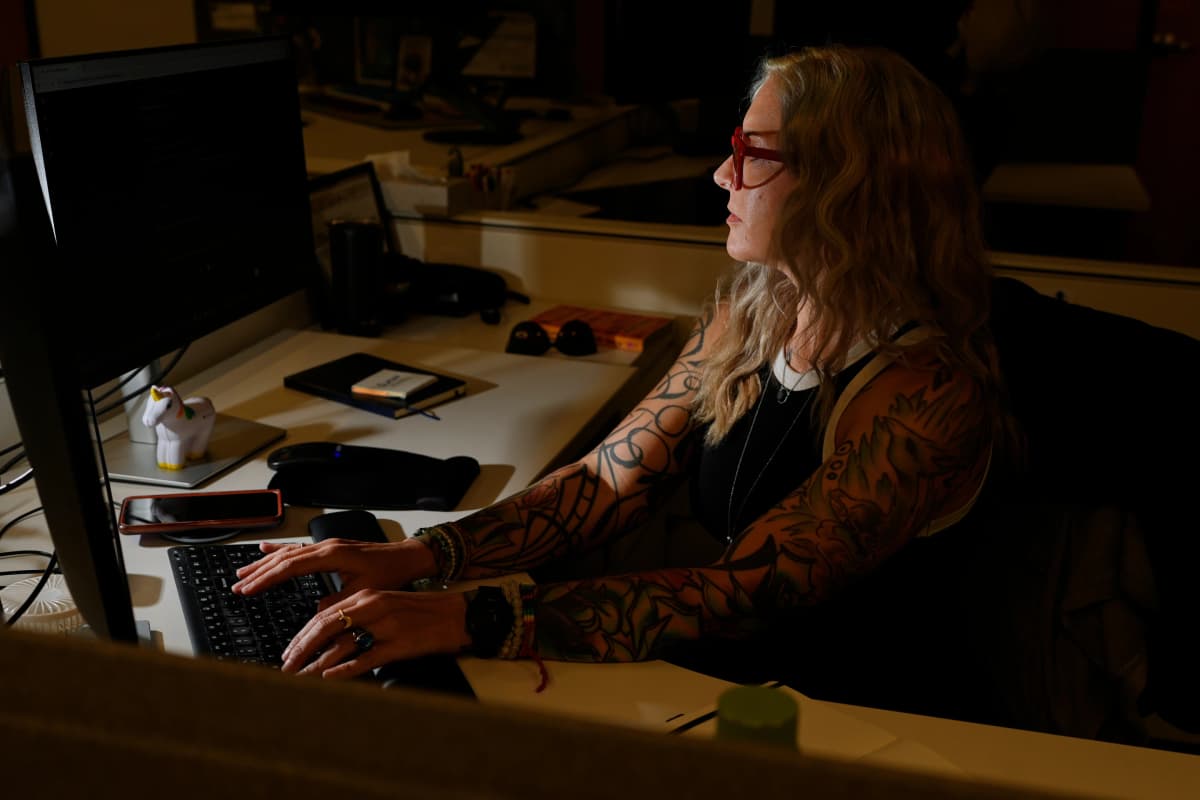
Administrative professionals are confronting a dual challenge: decades of declining employment numbers and the rapid emergence of AI tools capable of automating core aspects of their work. Yet rather than accepting displacement, a growing cohort of assistants is leveraging these same technologies to redefine what the role can be.
Deanna Danger, executive assistant to Vanderbilt University's chief information officer, exemplifies this shift. Since adopting AI tools in 2022, she has automated meeting transcription using Copilot and ChatGPT, compressing hours of note-taking work into minutes. "All you do is have to evolve," says Danger, who has worked in administrative roles since 2003.
Why it matters
The administrative profession employs roughly 2.1 million workers—86% of them women—who face heightened vulnerability to AI-induced job displacement due to lower median wages, limited savings, and narrow skill sets compared to the broader workforce. How these professionals respond to automation will shape both their individual careers and the future composition of office work across industries.
The numbers tell a stark story
Employment in administrative and secretarial roles has fallen from 3.5 million in 2004 to 2.1 million today, despite overall workforce growth during the same period. The U.S. Bureau of Labor Statistics projects continued decline across most categories, with medical secretaries representing the sole exception due to healthcare industry expansion.
According to Emily Rolen, lead economist for the BLS division of employment projections, productivity-enhancing technologies have consistently limited demand for administrative employment. Each wave of innovation—from word processing to scheduling apps—has transformed job duties while reducing headcount.
A January report from the Brookings Institution found that clerical workers may be particularly exposed to AI displacement. About 34% of secretaries and administrative assistants are 55 or older, compared to 23% of the overall workforce, and median pay ($47,460) trails the national average.
Strategic adoption creates new value
Yet labor statistics don't capture individual adaptability. Fiona Young, founder of AI training firm Carve and a former executive assistant, reports "a massive shift in demand" for her services since 2023. She has delivered training to administrative professionals at Google, Amazon, Uber, Salesforce, and LinkedIn, where employers want staff genuinely integrating AI into daily workflows.
Stephanie Martinez, who works remotely from El Salvador as an executive assistant at Sequel.io, demonstrates this strategic application. When her company needed more customer reviews, Martinez used AI to analyze all customer communications, identify promising candidates, and draft outreach emails—work that would have consumed days without automation. The time savings allowed her to approach the problem creatively rather than mechanically.
Oana Manolache, Martinez's employer and Sequel.io's CEO, insists AI cannot replace her executive assistant despite her stated policy of firing employees who don't use AI. The technology handles note-taking and meeting prep, but Martinez's value lies in building team connectivity, making judgment calls, and understanding stakeholder relationships.
Barriers remain
Melissa Peoples, an executive assistant coach based in Austin, notes that many assistants lack the bandwidth to incorporate AI despite interest in adoption. Gender dynamics compound this challenge in a female-dominated profession often paired with male executives. "You see those that are early adopters, and are crushing it, and are partnered with really empowering executives," Peoples says. "And then you see the other side of this, where literally assistants are being told, 'You're not smart enough to be in the room.'"
During a May virtual coffee chat hosted by the American Society of Administrative Professionals—which serves approximately 132,000 members—participants shared AI use cases ranging from flyer creation to social media captions. Yet concerns about data security and lack of regulation surfaced alongside enthusiasm, with some emphasizing that emotional intelligence and relationship-building skills remain irreplaceable.
These details were first reported by the Associated Press.
This is an original analysis by the Omega editorial team. Source reporting: AI Watch.
Want systems like this working for your business?
Book a Call