80% of U.S. Factories Run Without Automation Technology
Despite widespread belief that AI is critical for competitiveness, most American manufacturers struggle to move from intention to deployment.

The deployment gap
Eight in ten U.S. manufacturing facilities operate with zero automation, according to data cited by Intrinsic Chief Technology Officer Brian Gerkey. The statistic exposes a sharp divide between the industry's stated priorities and its operational reality.
Manufacturers overwhelmingly recognize AI's importance. Deloitte's 2025 Smart Manufacturing and Operations Survey found that 92% expect smart manufacturing to drive competitiveness over the next three years. Yet actual deployment remains concentrated among a small fraction of facilities, leaving most plants running on manual processes or decades-old control systems.
Jeff Burnstein, president of the Association for Advancing Automation, told Manufacturing Dive that while interest runs high across the sector, execution is where companies consistently falter. His organization's research confirms that manufacturers view AI as strategically critical, but few report widespread implementation today.
Why it matters
This deployment gap represents both risk and opportunity for U.S. manufacturers. Companies that move decisively on targeted automation projects can gain measurable advantage over the 80% still operating manually, while the industry as a whole faces competitive pressure from markets where full automation is standard practice.
What blocks deployment
The barriers extend beyond capital constraints. Manufacturers cite three persistent obstacles: workforce skills shortages, integration complexity with legacy equipment, and difficulty building internal business cases that justify ROI.
Legacy infrastructure presents a particularly thorny challenge. Facilities running older programmable logic controllers or proprietary control systems face compatibility questions before any AI or robotics layer can be added. The problem demands coordination between operations and IT teams—a capability many organizations have not developed.
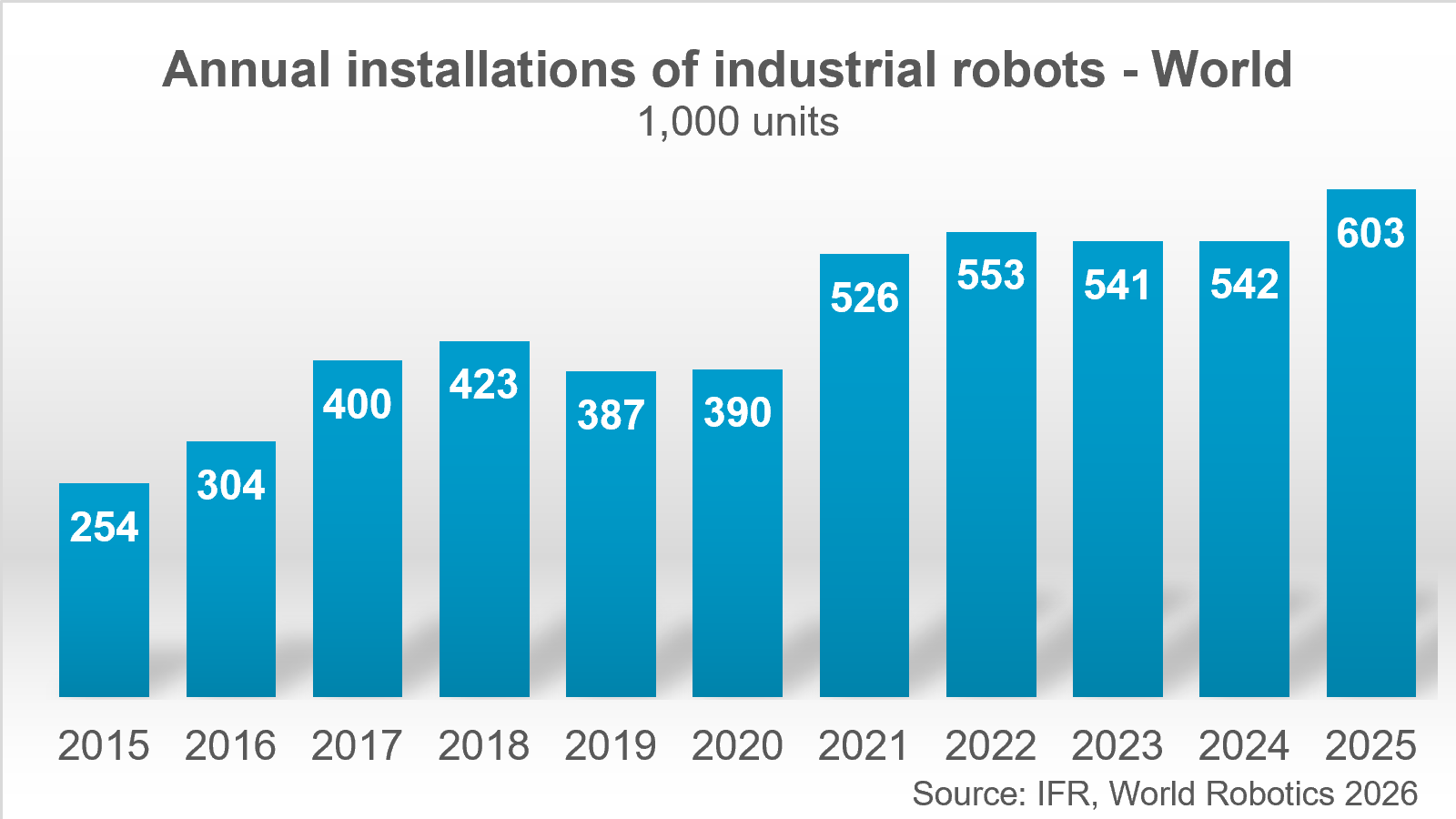
Fully automated facilities remain common in China and Japan but exceptional in the United States, where the installed base of older machinery complicates upgrade paths. The decision to modernize becomes a procurement, operations, and technology challenge simultaneously.
The path forward for leaders
Rockwell Automation's 11th annual State of Smart Manufacturing report positions industrial AI as the mechanism for moving from automation to autonomy, where operations adapt in real time without manual intervention. The report identifies three investment priorities for 2026: empowering the workforce, building operational resilience, and accelerating digital transformation.
Top performers structure automation to augment worker decision-making rather than replace labor, providing real-time data and AI-generated insights that improve outcomes. Their deployment strategy favors targeted, high-reliability use cases over facility-wide overhauls.
Rockwell's case studies include offshore oil platforms that modernized fire and gas safety systems to cut maintenance costs, and a Brazilian natural gas terminal that completed firmware upgrades with zero downtime. These projects share a pattern: incremental modernization that preserves continuity while adding capability.
For operations leaders evaluating where to begin, safety systems, remote monitoring, and predictive maintenance consistently demonstrate clear ROI and manageable integration scope. These use cases are easier to fund and faster to deploy than broader autonomy initiatives, making them practical entry points for facilities starting from zero automation.
Practical next steps
With 80% of U.S. facilities at zero automation, even modest incremental projects position an operation ahead of most peers. Prioritizing use cases with measurable safety or reliability outcomes simplifies ROI documentation compared to broad AI deployments.
Integration with legacy equipment remains the most commonly cited deployment barrier, requiring cross-functional alignment between IT and operations before platform commitments. The 92% competitiveness figure from Deloitte and the 80% non-automation statistic provide board-level context for building urgency around automation investments.
These details were first reported by Manufacturing Dive and MarketScale.
This is an original analysis by the Omega editorial team. Source reporting: Automation Watch.
Want systems like this working for your business?
Book a Call