78% of utilities now deploy AI to manage data center grid strain
National Grid Partners survey reveals reliability has overtaken net-zero as top priority amid surging power demand from artificial intelligence infrastructure.
Nearly four out of five U.S. utility innovation leaders are now deploying artificial intelligence applications to manage the very demand surge that AI data centers are creating, according to National Grid Partners' third annual Utility Innovation Survey released this week.
The survey of 134 utility innovation leaders, conducted between May and July 2026, found 78% are deploying or operationalizing at least one AI application to manage interconnection demand. This comes as 74% report that AI-driven data center load growth is directly impacting grid reliability, according to findings first reported by National Grid Partners.
Reliability displaces climate as top concern
The pressure from data center expansion has fundamentally reordered utility priorities. Grid reliability has now overtaken net-zero goals as the industry's primary focus, with 73% of leaders ranking reliability in their top three organizational priorities—up sharply from 43% in 2025. Meanwhile, net-zero commitments dropped from 54% to just 16% over the same period.
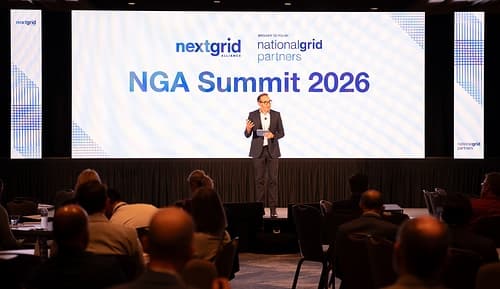
The findings were unveiled at the fourth annual NextGrid Alliance Summit in Boston, where leaders from more than 50 utilities worldwide gathered to discuss innovation strategies.
"The rapid growth of AI data centers is creating new operational and financial pressures for our industry, but AI also can be a significant part of the solution," said Pradeep Tagare, Interim President of National Grid Partners.
Scaling challenges persist despite budget growth
While 72% of utility leaders report increased innovation budgets this year, the industry continues to struggle with deployment speed. The survey found 84% of organizations now take more than a year to move projects from pilot to full rollout—up from 78% in 2025 and 66% in 2024.
Respondents cited workforce gaps in AI skills and the industry's traditionally cautious culture as key barriers. Innovation spending remains heavily weighted toward incremental improvements (59%) rather than transformational initiatives (16%).
Why it matters
The survey reveals a critical tension: utilities face mounting pressure to accommodate explosive data center growth while maintaining reliability for existing customers. With 83% of respondents saying infrastructure costs for AI data centers are being passed to residential customers through higher electricity bills, and 87% reporting that returns on innovation are constrained by outdated regulatory frameworks, the industry faces both technical and political challenges in managing this transition.
Industry response takes shape
National Grid this week joined the AI Energy Management Alliance (AMEA), a new consortium including Google, NVIDIA, Anthropic, and other utilities. The group aims to promote flexible data centers that can automatically reduce power consumption during peak demand periods.
In December, National Grid Partners portfolio company Emerald AI led a UK pilot with NVIDIA demonstrating that AI software could cut data center energy use by more than a third in under a minute during simulated grid strain.
The survey also found growing utility engagement with startups, with 34% now partnering with early-stage technology companies, up from 28% in 2025. National Grid Partners announced two new investments at the summit: Terragrit, a physical operations simulation platform, and LineVision, which provides grid intelligence to improve resilience without new infrastructure.
Details were first reported by National Grid Partners in conjunction with the NextGrid Alliance Summit.
This is an original analysis by the Omega editorial team. Source reporting: AI Watch.
Want systems like this working for your business?
Book a Call