59% of Georgia Teachers Now Use AI for Lesson Planning
State audit reveals widespread adoption among educators even as most worry about student overreliance and academic integrity.
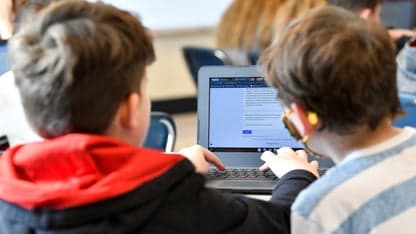
More than half of Georgia's teachers have incorporated artificial intelligence into their work, according to a new report from the Georgia Department of Audits and Accounts, though many remain concerned about how students use the same technology.
The audit, based on responses from over 13,000 teachers statewide, found that 59% use generative AI for teaching tasks. Among those educators, 95% reported using AI for instructional planning and preparation at least a few times annually, with more than half doing so weekly.
Why it matters
The findings reveal a significant gap between teacher adoption and student oversight in K-12 education. While educators embrace AI to save time and improve materials, most lack formal training or clear policies to guide its use—creating inconsistent practices within districts and raising questions about equity, particularly in high-poverty schools where training access lags.
How teachers are using AI
Venecia Whyte-Foster, a middle school English teacher in Savannah-Chatham County, represents the early-adopter cohort. She creates personalized chatbots that transform lessons into escape room-style games, requiring students to demonstrate understanding before advancing through levels.
"They have to ask a question directly toward the topic, and then the chatbot will give them more questions," Whyte-Foster explained. Students cannot progress until they answer effectively.
Nearly 90% of teachers who use AI reported positive classroom impact, citing time savings, improved lesson materials, and increased student participation. However, 62% said they never use AI for grading student work—the task teachers are most reluctant to automate.
Student use raises concerns
While elementary students rarely use AI for assignments, adoption increases with grade level. A majority of high school teachers report students using AI on assignments at least half the time.
Most middle and high school teachers said AI has had a negative impact on student learning. Teachers who don't use the technology cited concerns about student overreliance, damaged critical thinking skills, cheating, and data privacy issues.
Whyte-Foster teaches students about AI hallucinations—when systems generate confident but fabricated responses—and emphasizes the importance of verification. When she detects AI-generated work, which she said is usually obvious given her familiarity with student writing, she discusses academic integrity and offers students the chance to redo assignments for reduced credit.
"They'll tell you, yes, they'd prefer a 70 to a zero," she said.
Training and guidance gaps
About two-thirds of teachers reported receiving guidance on AI use, while 70% said they had received training. However, 27% received neither. Responses varied significantly within individual districts, suggesting either poor communication about available resources or uneven distribution of training opportunities. Teachers in high-poverty districts were more likely to report receiving no guidance or training.
Xiaoming Zhai, an associate professor at the University of Georgia who directs the AI4STEM Education Center, said teachers must learn to use AI responsibly to prepare students for AI-dependent careers.
"If they're not able to use AI, how can they expect them to educate the future workforce to be able to use AI responsibly and ethically?" Zhai said.
The Georgia Department of Education appointed an AI ethics and impact officer in January 2025 and released guidance on best practices. State School Superintendent Richard Woods emphasized that AI should remain a tool, not a replacement for teacher expertise or student critical thinking.
These details were first reported by WABE.
This is an original analysis by the Omega editorial team. Source reporting: AI Watch.
Want systems like this working for your business?
Book a Call